An Unexpected Discovery Along the Fence
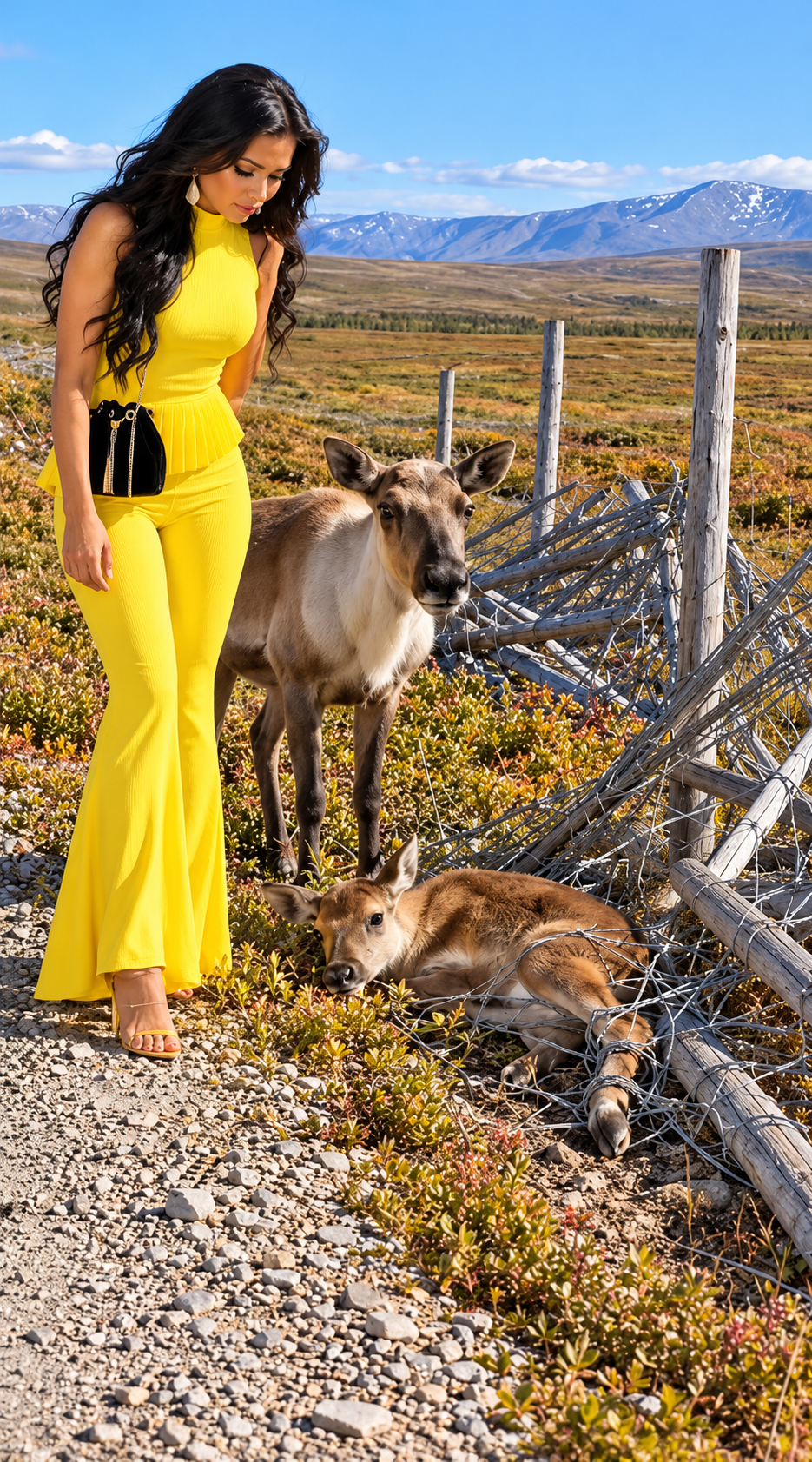
Anna Larsen stopped walking when she noticed something moving beside the wooden fence.
A young reindeer stood awkwardly between two posts, struggling to free its front leg.
Its small body trembled as it tried stepping backward.
Anna immediately recognized that the animal could not escape without assistance.
She approached slowly but stopped when the reindeer became more agitated.
The fence bordered a wooded pasture near her family’s rural property.
Reindeer occasionally passed through the area, although they rarely approached the buildings.
Anna noticed fresh tracks leading from the forest toward the fence.
There were also larger hoofprints nearby, suggesting an adult animal had recently passed through.
She wondered whether the young reindeer’s mother was still somewhere close.
Rather than pulling at the trapped leg, Anna stepped away and contacted the regional wildlife service.
The dispatcher asked her to remain nearby while a trained worker traveled to the property.
Then Anna heard branches moving beyond the trees.
The Tracks Along the Fence
Anna remained several yards from the trapped reindeer, watching for signs of further distress.
The animal had stopped struggling but continued shifting its weight between its remaining legs.
She noticed that one section of fencing had recently tilted toward the pasture.
Heavy rain had softened the soil around a supporting post, creating an unusually narrow opening.
The young reindeer appeared to have attempted passing through that gap.
Its front leg had slipped between two wooden rails, leaving it unable to move forward.
Anna photographed the fence from a safe distance for the arriving wildlife worker.
She also contacted her neighbor, Erik, who maintained the pasture boundaries.
Erik confirmed that the damaged section had not been present during his previous inspection.
He offered to bring tools but agreed not to approach the animal before professional assistance arrived.
Anna returned her attention to the forest.
A larger reindeer briefly appeared between the trees before disappearing behind thick branches.
Its presence strengthened Anna’s suspicion that the young animal had become separated from its mother.
She hoped the adult would remain nearby until the rescue was complete.
The Wildlife Worker Arrives
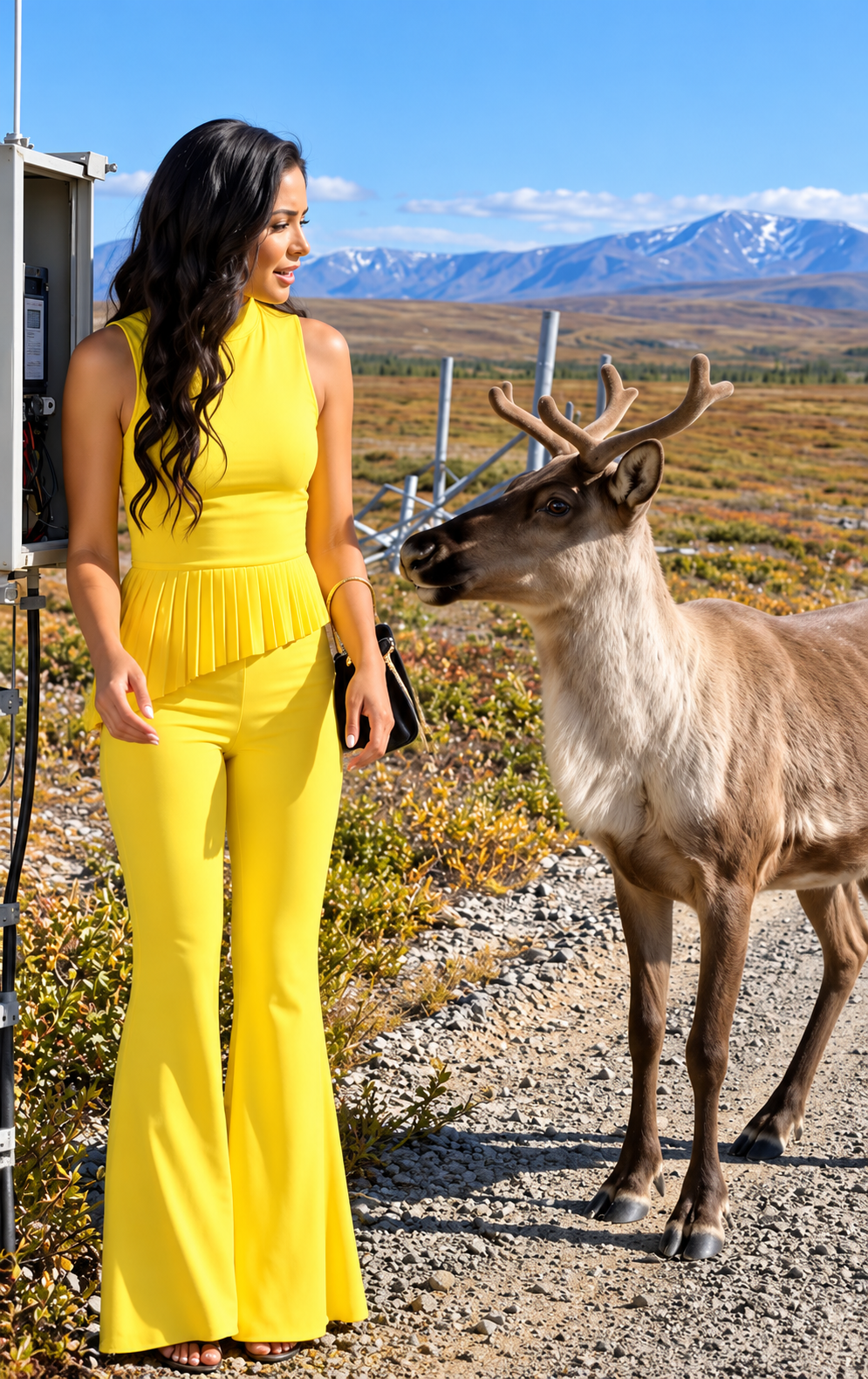
Wildlife worker Daniel Berg arrived approximately twenty minutes after Anna’s telephone call.
He carried protective equipment, a first-aid kit, and tools suitable for safely opening the fence.
Anna explained what she had observed and showed him the photographs.
Daniel examined the young reindeer without approaching directly.
He confirmed that the animal’s front leg was trapped between two wooden rails.
However, he could not determine whether the leg was injured until the pressure was removed.
Daniel asked Anna to remain behind a nearby gate while he prepared the rescue.
He also advised Erik to keep his tools outside the immediate working area.
The young reindeer became alert when Daniel approached, turning its head toward the forest.
Daniel paused and allowed the animal to settle before continuing.
He noticed that the lower fence rail could be loosened without disturbing the supporting post.
That would create enough space to release the leg without pulling against it.
Before beginning, Daniel checked the surrounding pasture for other animals.
The larger reindeer was no longer visible, but fresh tracks remained near the forest edge.
Daniel decided to complete the rescue quickly while minimizing unnecessary contact.
A Careful Plan to Free the Reindeer
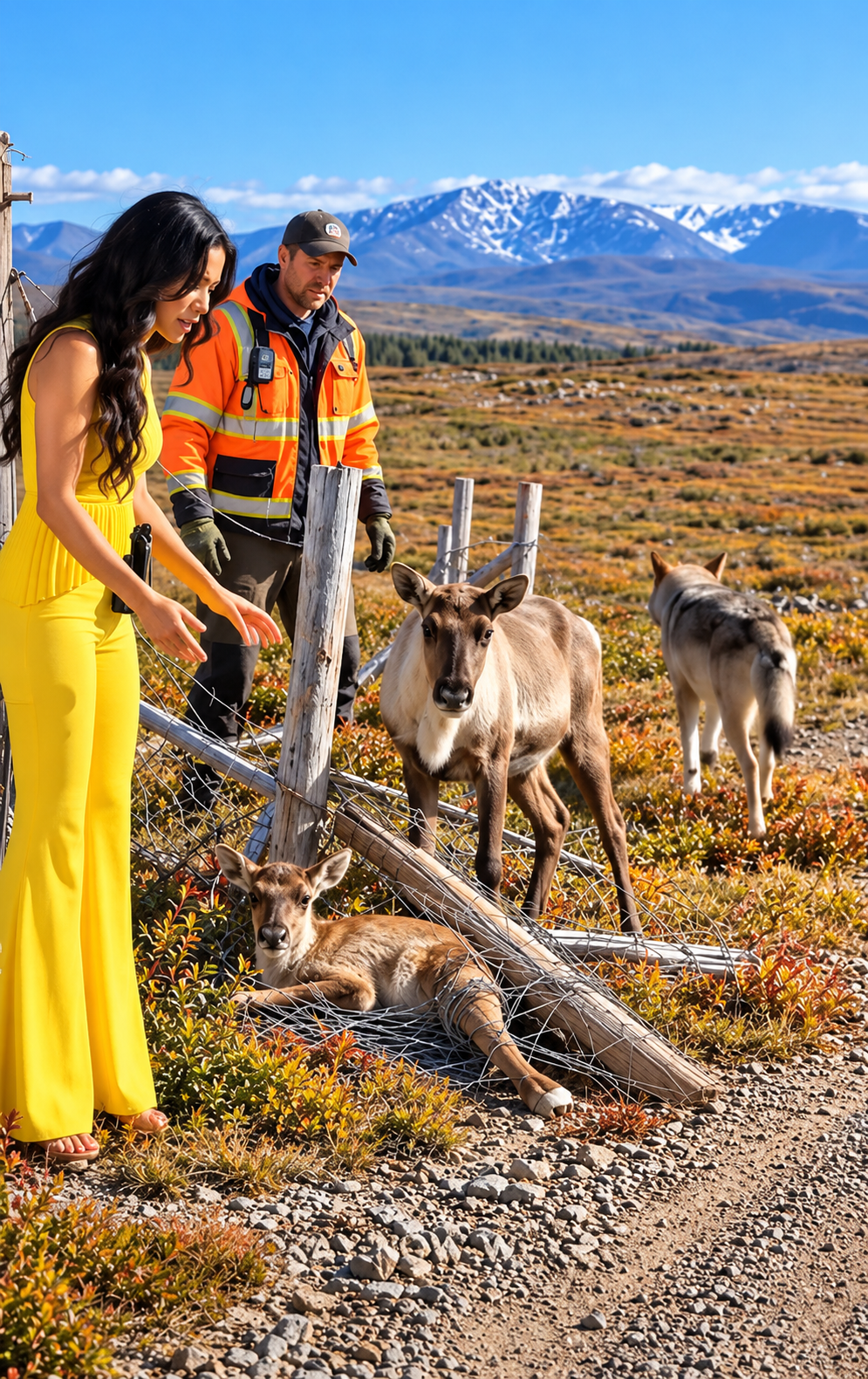
Daniel positioned himself beside the damaged fence, avoiding the animal’s direct kicking range.
He placed a folded protective pad between the trapped leg and the wooden rail.
The padding reduced pressure while he prepared to loosen the fasteners.
Anna watched quietly from behind the gate, following his instructions.
Erik handed Daniel the requested tool without entering the confined area.
Daniel loosened the first fastener and checked whether the rail had begun moving.
The young reindeer shifted suddenly, causing him to stop.
He waited until the animal settled before continuing with the second fastener.
The lower rail gradually separated from the post, creating a wider opening.
However, the reindeer’s leg remained positioned awkwardly against the remaining wood.
Daniel realized that simply removing the rail might allow the animal to twist its leg.
He adjusted the protective padding and carefully supported the trapped area.
Then he widened the opening slightly more.
The reindeer moved its shoulder forward, testing the available space.
Daniel stepped aside, allowing the animal room to reposition itself naturally.
For several seconds, nothing happened.
Then the young reindeer lifted its trapped leg.
The Moment the Animal Became Free
The reindeer’s hoof cleared the wooden rail as Daniel maintained the widened opening.
Its front leg slipped free, and the animal stepped backward onto the grass.
Anna watched as it regained its balance beside the damaged fence.
The young reindeer remained standing, although it briefly held one hoof above the ground.
Daniel stayed still, observing whether the animal could bear weight normally.
After a few moments, it lowered the hoof and took several cautious steps.
The movement appeared coordinated, but Daniel continued checking for visible signs of injury.
He noticed a small area of disturbed fur near the lower leg.
There was no obvious bleeding or severe swelling.
The reindeer walked several more steps before stopping near the pasture’s edge.
Daniel explained that unnecessary handling could increase stress in a wild animal.
Because it was standing and moving independently, he preferred observing from a distance.
Anna remained behind the gate while the animal examined its surroundings.
Suddenly, the young reindeer raised its head toward the forest.
A larger reindeer emerged between the trees and stopped beside a cluster of bushes.
The young animal moved cautiously toward it.
Daniel watched both animals carefully, allowing them to approach each other without interference.
A Reunion Near the Forest
The adult reindeer remained still as the younger animal approached.
After a brief pause, the two animals moved together toward the wooded area.
Anna watched until their shapes disappeared behind the trees.
She asked Daniel whether the adult was definitely the young reindeer’s mother.
He explained that their behavior suggested a familiar relationship, although he could not confirm it.
What mattered immediately was that the young animal was moving freely.
Daniel inspected the damaged fence and advised Erik to secure the opening.
Erik replaced the loosened rail and reinforced the unstable supporting post.
They also examined the surrounding fence for similar gaps.
Anna thanked Daniel for explaining why the rescue required patience rather than force.
He reminded her that approaching trapped wildlife without training could injure both people and animals.
Before leaving, Daniel documented the animal’s condition and the location of the incident.
He planned to share the observations with colleagues responsible for monitoring wildlife in the area.
Anna agreed to report any unusual behavior if she saw the young reindeer again.
She was relieved that the animal had returned toward the forest without needing transportation.
The Fence That Changed Their Routine
The following morning, Anna walked along the pasture boundary before beginning her usual chores.
The repaired fence stood securely, with no remaining gaps between its lower rails.
Erik had also strengthened another post weakened by the recent rainfall.
Anna noticed several fresh hoofprints near the woodland entrance.
She could not determine whether they belonged to the same reindeer.
Nevertheless, the tracks reminded her of the previous afternoon’s rescue.
Daniel later confirmed that no additional reports of an injured young reindeer had reached the wildlife service.
He emphasized that this did not establish the animal’s long-term condition.
Still, its ability to walk away independently had been encouraging.
Anna continued checking the fence regularly, especially after heavy rain.
This fictional account followed a simple discovery that required careful professional intervention.
A young reindeer had become trapped in a damaged fence near a rural pasture.
Anna recognized the problem, requested assistance, and avoided handling the animal herself.
Daniel widened the fence opening and allowed the reindeer to free its leg safely.
The animal then moved toward an adult reindeer waiting near the forest.
The experience encouraged Anna and Erik to maintain the pasture boundary more carefully.
For Anna, the most meaningful moment was watching the young reindeer walk freely toward the trees where another reindeer waited.