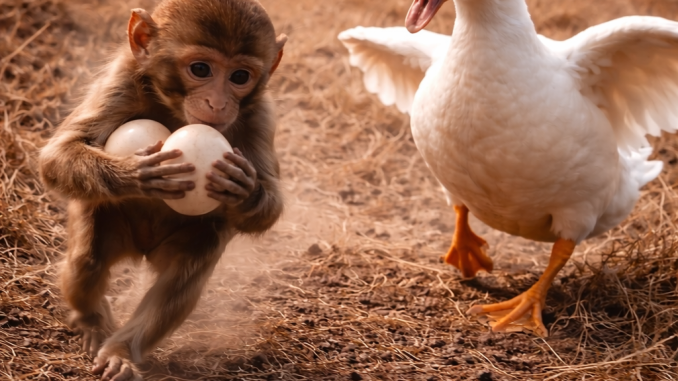
It started as a calm, open field under bright daylight, the kind of place that feels quiet simply because nothing interrupts it. Dry yellow grass covered the ground, stretching far in every direction without trees or shade to break the emptiness. At first glance, nothing seemed wrong. It looked like just another piece of land, untouched and still.
But in the distance, something was changing.
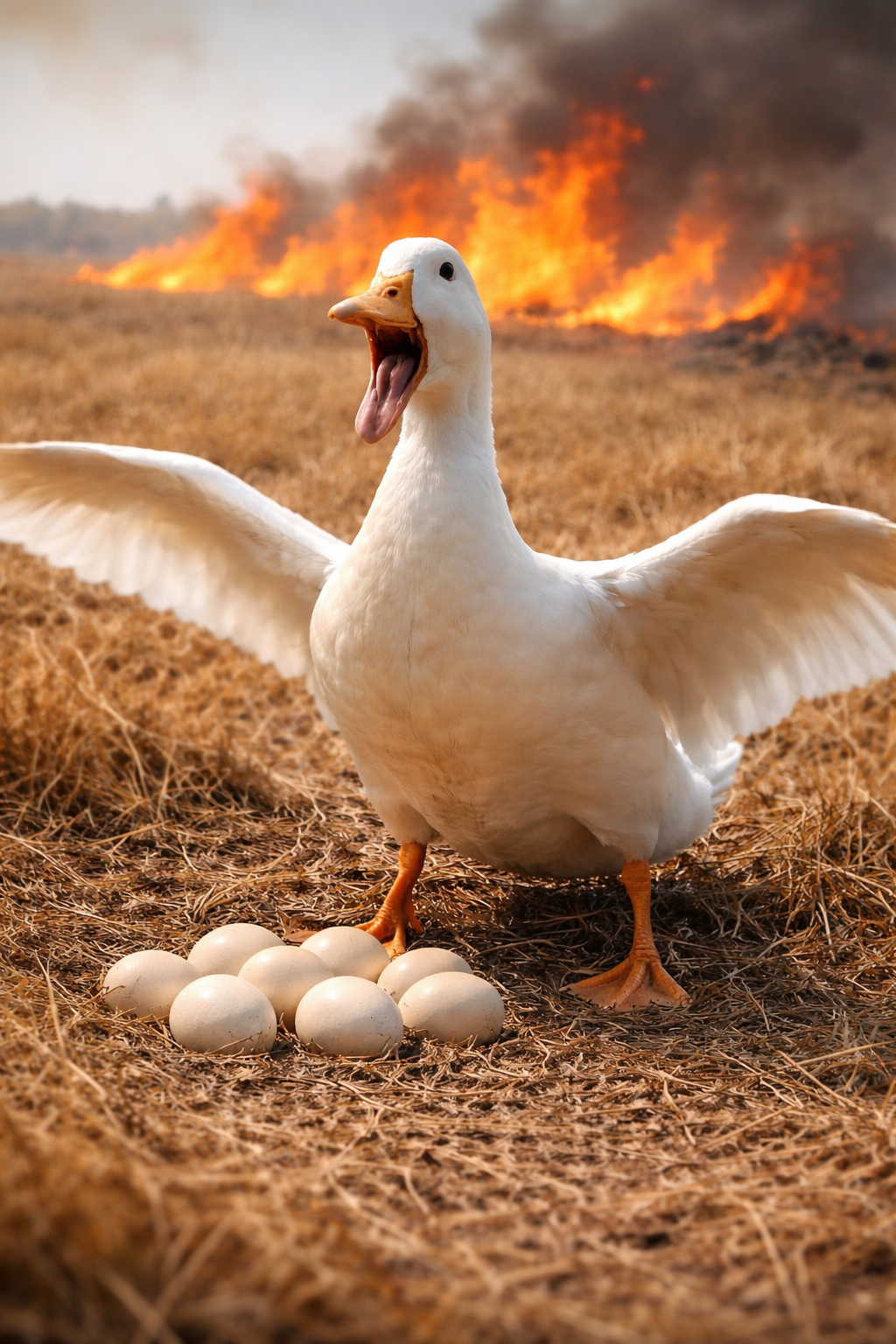
A wildfire had already begun spreading, slowly at first, then more visibly as the flames grew stronger. Smoke rose into the air, carried by the wind, and what had been a peaceful field was now turning into something dangerous. The movement of the fire wasn’t fast enough to cause immediate panic, but it was steady enough to make the situation serious.
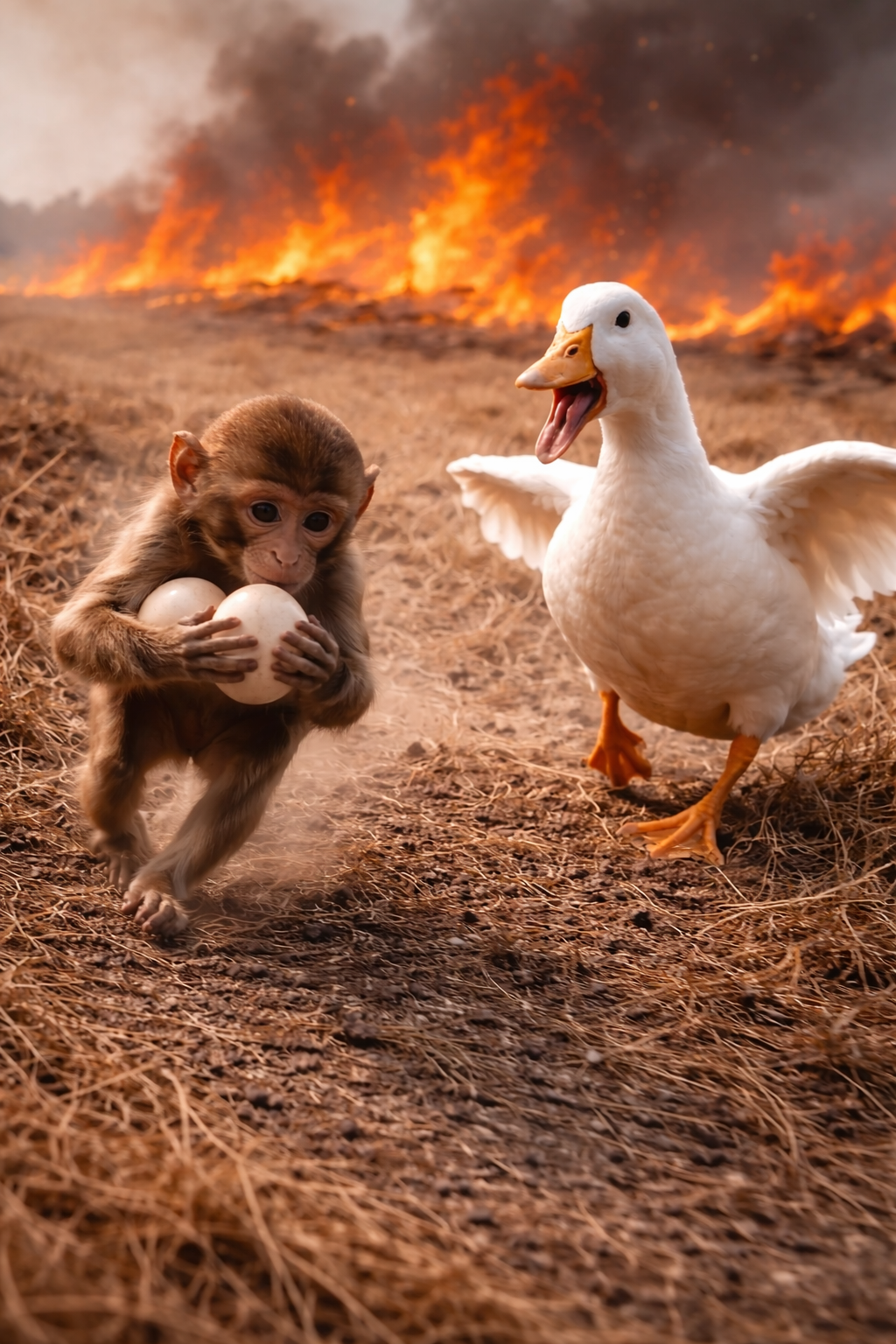
In the middle of that field stood a white duck, guarding a small group of eggs placed directly on the ground. The eggs were exposed, fragile, and completely dependent on her. Unlike other animals that could run or hide, they had no way to escape. The duck’s behavior reflected that reality. Her wings were slightly raised, her beak open, and her movements restless. She wasn’t calm anymore. She understood the danger, even if she couldn’t fully respond to it.
As the fire moved closer, the duck began trying to solve a problem that didn’t have an easy solution. She walked around the eggs, nudging them carefully with her body, attempting to push them forward. The effort was visible, but ineffective. Eggs don’t roll far on uneven ground, and they certainly don’t move together. Each attempt resulted in minimal progress, and with every passing moment, the urgency increased.
The smoke in the air became more noticeable. It wasn’t overwhelming yet, but it was enough to signal that time was running out. The duck’s movements became faster, more erratic, as she shifted between trying to move the eggs and scanning the surroundings for any kind of help.
There was no one there.
No sound of vehicles.
No sign of intervention.
Just the quiet approach of something that would soon become impossible to avoid.
The duck stayed where she was, even though she could have left. That decision, whether instinctive or conscious, defined everything that followed. She chose not to abandon the eggs, even when the situation offered no clear way to protect them. Her movements slowed slightly as she settled closer to them, lowering her body as if trying to provide some form of protection from the heat and the approaching danger.
It was a moment of visible limitation. She was aware of the threat, she was reacting to it, but she couldn’t change the outcome on her own.
That’s when something unexpected appeared.
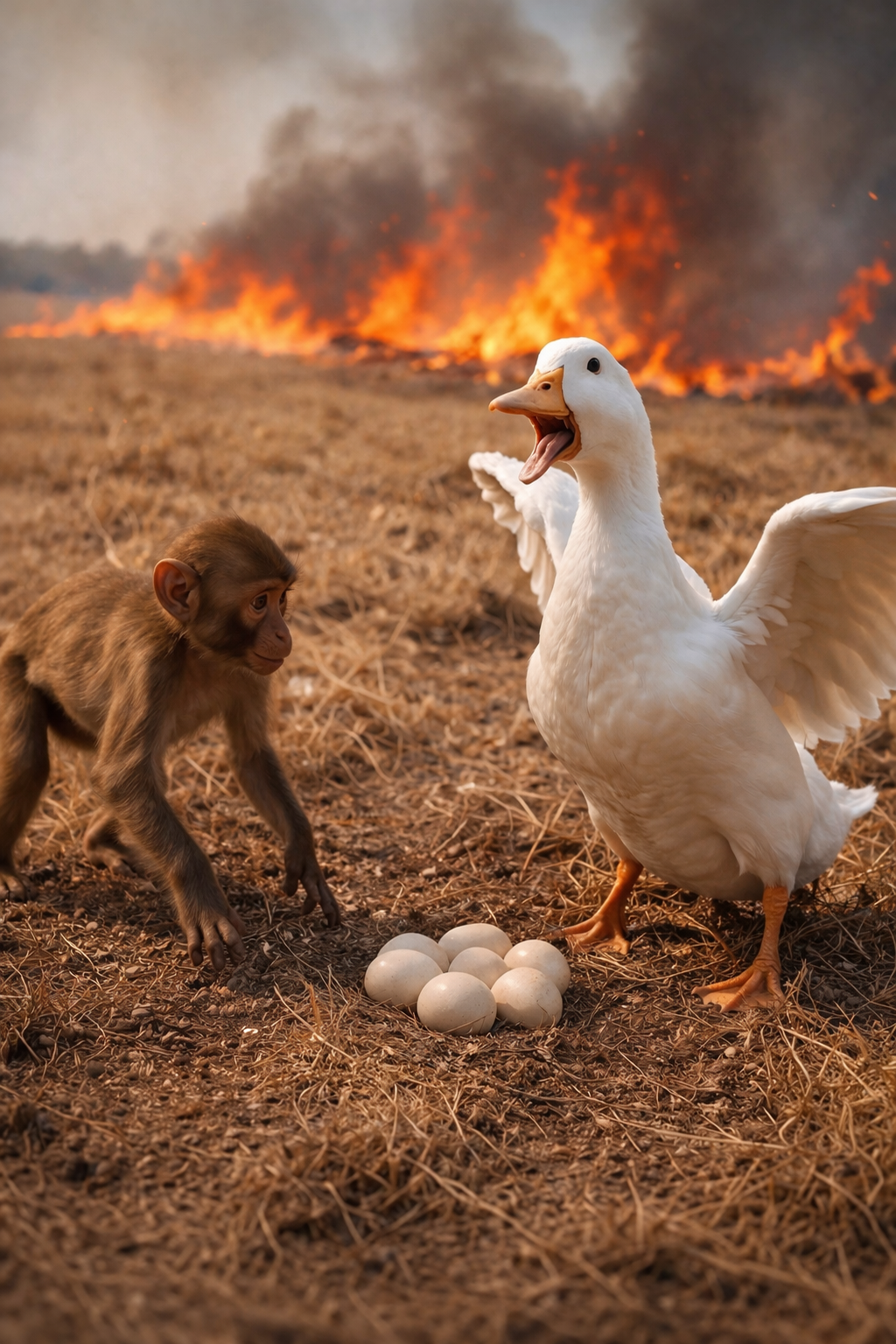
From the side of the field, a small brown monkey moved cautiously toward the scene. It didn’t rush, and it didn’t react with fear. Instead, it observed first, taking in the situation before stepping closer. The duck turned immediately toward the movement, alert but not aggressive. Her reaction wasn’t to push the monkey away, but to watch it carefully.
The environment hadn’t changed, but the situation had.
The monkey stepped closer to the eggs, then paused briefly as if assessing what to do. There was no sign of panic in its movements. It looked from the duck to the eggs and back again, as if recognizing that something needed to happen.
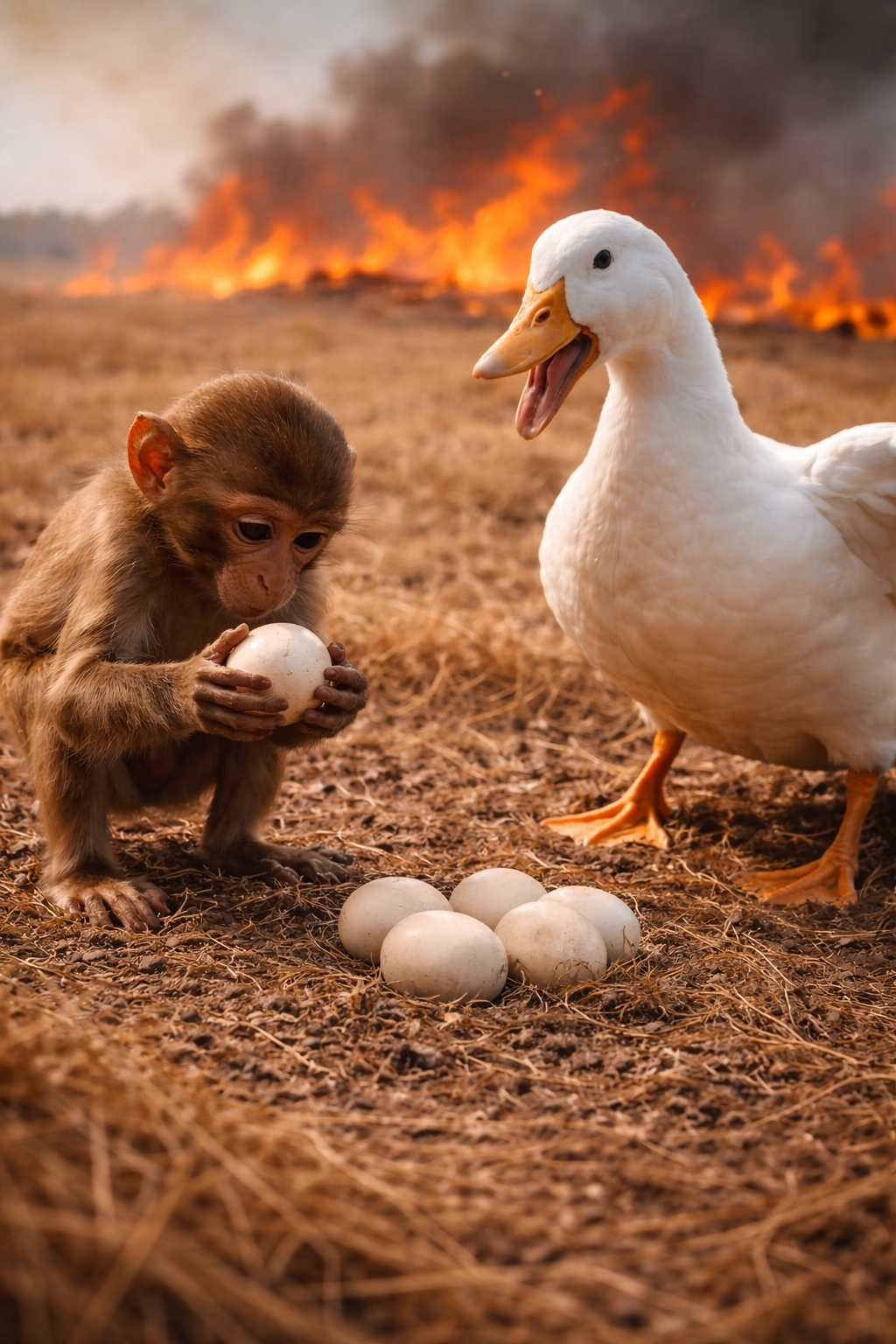
Then, slowly and carefully, it reached down and picked up one of the eggs.
The movement was controlled, not rushed, and surprisingly precise. The duck remained close, watching every action but not interfering. There was tension in the moment, but not conflict. It was clear that both animals were responding to the same problem, even if they were doing so in different ways.
The monkey didn’t stop at one egg. It began gathering more, holding them carefully against its body. The duck followed immediately, staying close, her attention fixed on the eggs rather than anything else.
Behind them, the fire continued to advance.
At that point, staying in place was no longer an option.
The monkey began moving away from the danger, stepping quickly but carefully across the uneven ground. Its pace increased slightly, but it never lost control of what it was carrying. The duck stayed beside it, matching its movement, not falling behind.
The fire behind them grew brighter, more visible, but the distance between them and the flames slowly increased. The environment ahead began to change as well. The dry yellow grass gave way to patches of green, and the air felt clearer, less affected by smoke.
They were moving into a safer area.
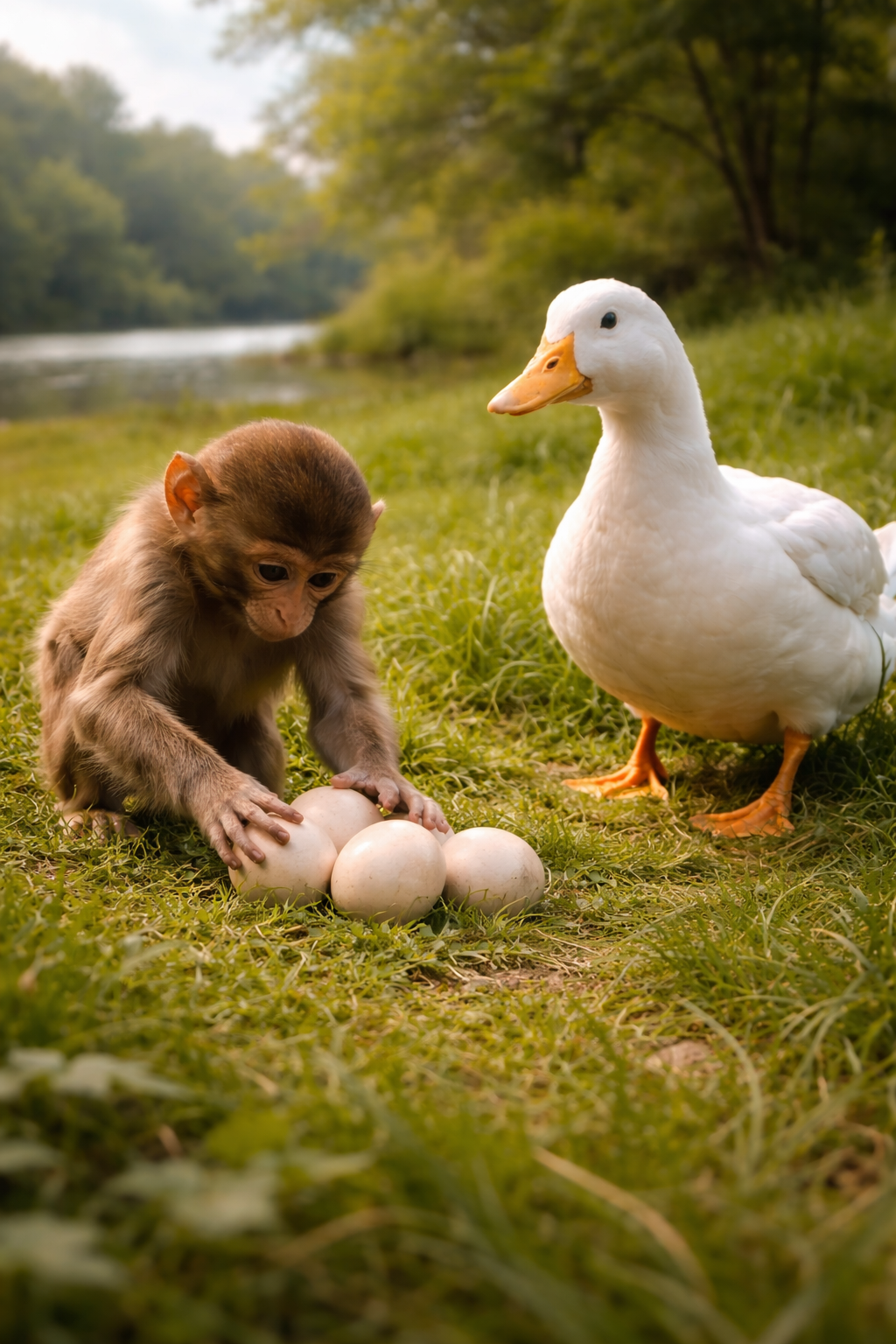
After covering enough distance, the monkey slowed down and lowered itself to the ground. One by one, it placed the eggs down carefully, making sure they were stable and not at risk of rolling. The duck stepped forward immediately, positioning herself beside them, her body now relaxed compared to earlier.
The danger was no longer immediate. The fire remained in the distance, but it was no longer a direct threat. The duck stayed beside the eggs, her posture calm, her movements steady. The monkey remained nearby for a moment, then stepped back, its role in the situation complete.
What had started as a problem with no solution had turned into something else entirely. Not because the environment changed, but because action was taken at the right moment.
This situation didn’t follow any predictable pattern. A duck, unable to move her eggs, and a monkey stepping in to help is not something people expect to see. But that’s exactly what makes moments like this stand out. They challenge assumptions and show that outcomes are not always defined by limitations alone.
The field behind them remained damaged by fire. The air still carried traces of smoke. But the outcome for those eggs was different.
Because one animal stayed.
And another stepped in.
The moment didn’t need anything more than that.