I was just trying to buy a secondhand coat for my daughter with what little money remained after hospital bills. Then a stranger’s remark in the thrift store line turned an ordinary moment into something that changed everything.
I didn’t walk into that thrift store expecting anything to change. If I’m being honest, I didn’t expect much of anything at all. I was simply following the quiet instinct that keeps people moving when stopping would mean thinking too much.
My name is Lillian Hayes. I’m thirty-six years old, and that winter I had become very good at doing math in my head while pretending everything was fine.
Not complicated math. Just the kind that tells you whether you can afford milk and medicine in the same week… or whether a coat might cost more than the electricity bill you’re already late on.
That afternoon I had forty-eight dollars in my wallet.
And I had already spent the morning deciding what not to buy.
The cold that year wasn’t dramatic or poetic. It simply lingered.
It settled into the cracks of our apartment windows.
It stayed inside sleeves that weren’t thick enough.
And it appeared in the quiet pauses between my daughter Clara’s coughs at night.
It wasn’t the kind of winter people wrote stories about.
It was the kind that slowly wore you down.
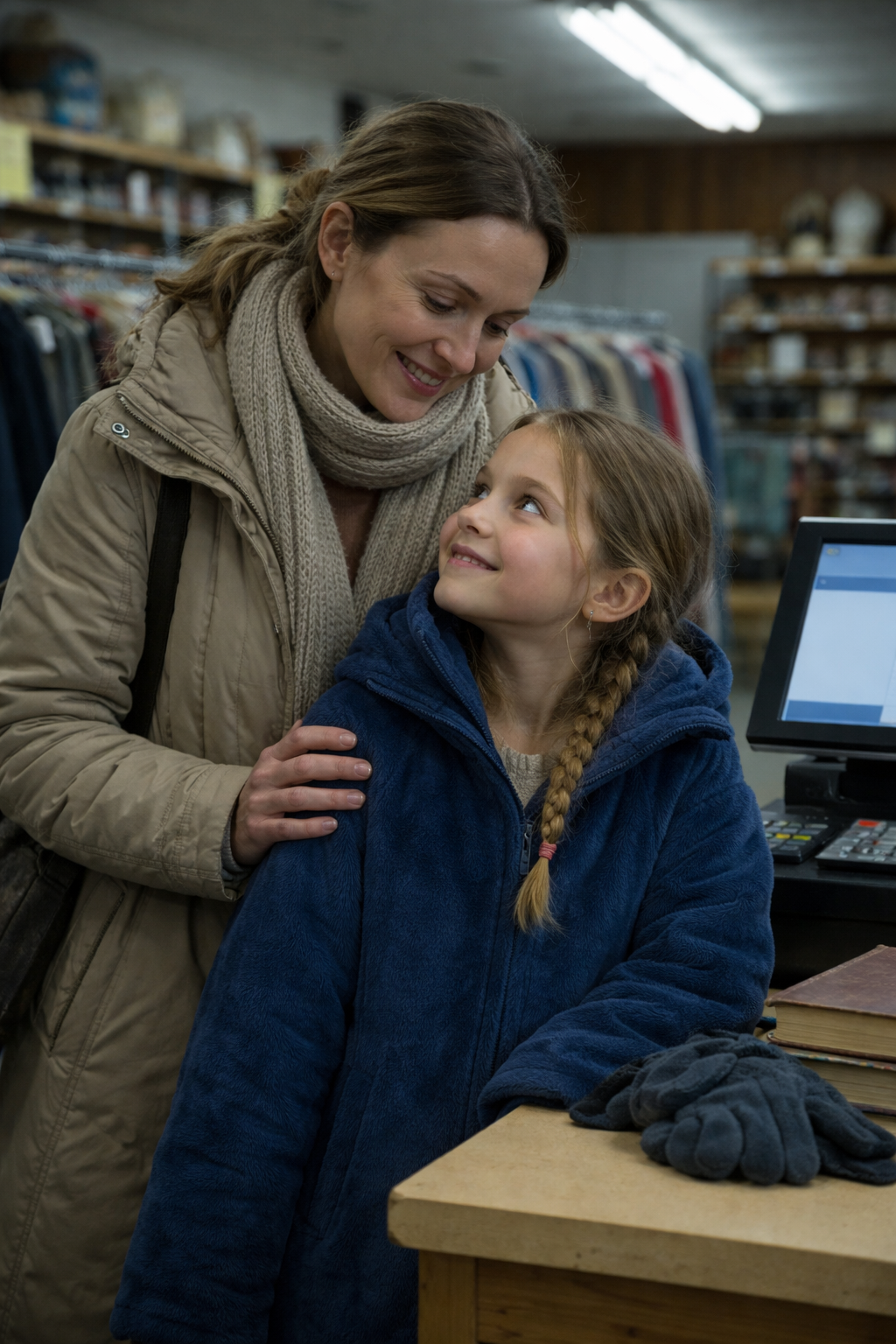
Clara walked beside me as we stepped into the thrift store.
Her hand slipped into mine — not because she was scared, but because she was tired.
Children show tiredness differently than adults. They lean into you quietly, as if you are still the safest place in the world.
Even when you’re not sure you deserve that title anymore.
Clara wandered toward the clothing racks.
Her fingers moved slowly across the coats, almost as if she were reading them.
Then she stopped.
“Mom,” she said softly.
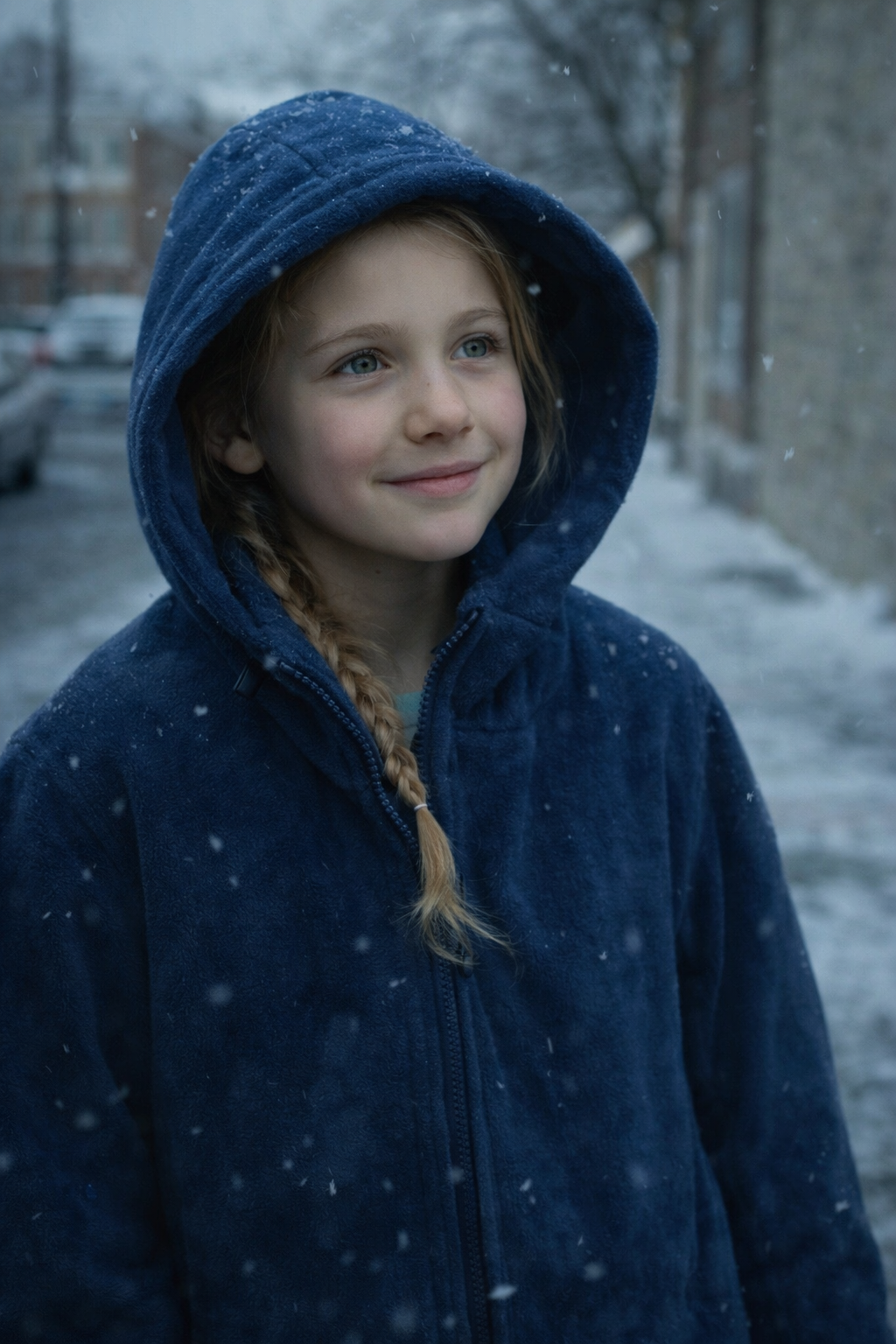
She pulled out a deep blue coat.
Not new.
But not worn beyond saving either.
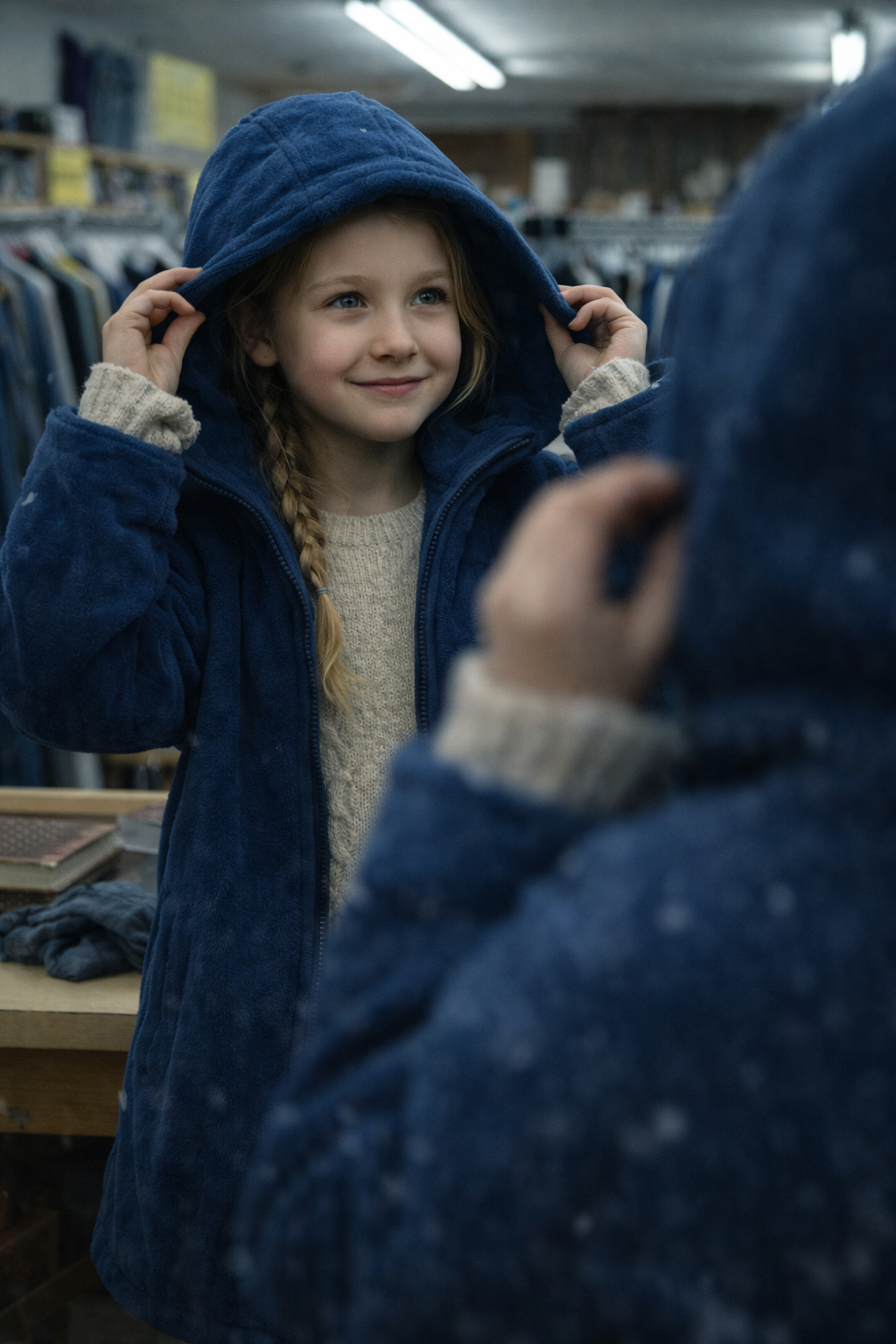
She slipped it on carefully.
Almost cautiously.
Like it might reject her if she moved too quickly.
Then she looked up at me with a small smile.
“This one feels warm,” she said.
Not pretty.
Not fancy.
Just warm.
And somehow that word carried more meaning than anything else.
We placed it in the basket.
And suddenly everything became fragile.
Because once something goes into the basket, it stops being imaginary.
It becomes part of the math.
By the time we reached the checkout line, my mind was already calculating numbers.
The gloves.
The leggings.
The book Clara insisted was “still readable.”
Every item felt like a small negotiation with reality.
The line moved slowly.
Fluorescent lights hummed above us.
Clara leaned gently against my arm.
“I’m not that cold anymore,” she whispered.
“I know,” I said, brushing her hair aside. “But it’s still good to have something warmer.”
Then I felt it.
That subtle shift in the air when someone starts watching you.
Not kindly.
Judging.
The woman behind us sighed.
“Some people,” she muttered, “have all the time in the world to stand around.”
I said nothing.
Explaining your life to someone who has already decided who you are rarely changes anything.
The cashier began scanning the items.
Beep.
$12.40.
Beep.
$18.75.
Beep.
$26.10.
Still manageable.
Still safe.
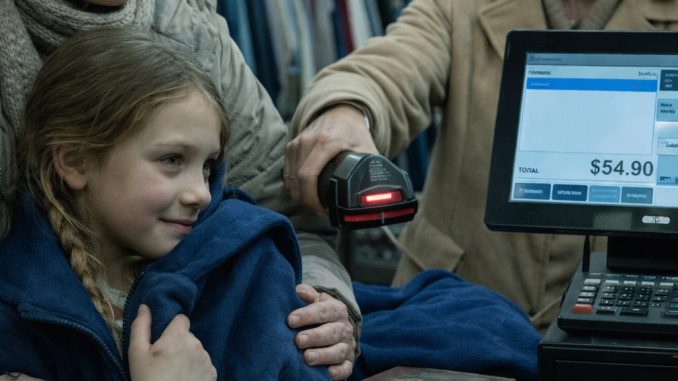
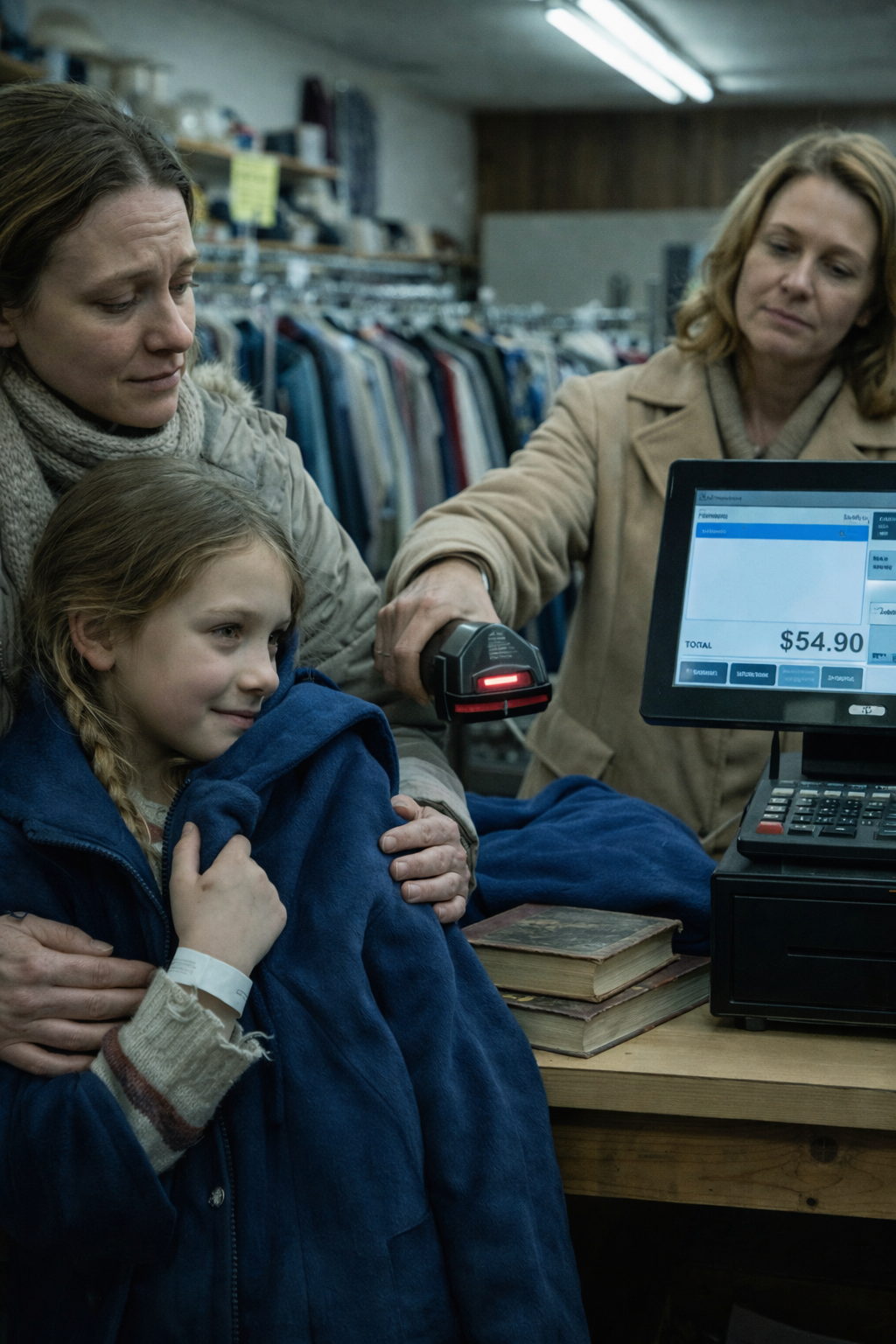
Then she picked up the coat.
There was a brief pause.
Then the scanner beeped again.
$54.90.
The number hit harder than it should have.
Not because it was huge.
But because it was just enough to break everything.
“I’m sorry,” I said quietly, reaching for the coat. “We’ll leave this one.”
Clara didn’t protest.
She simply stood still for a moment.
“Oh,” she said softly. “Okay.”
Then she added quietly:
“I thought I could wear it next week.”
The cashier looked up.
“What’s next week?”
Clara pushed up her sleeve.
The hospital bracelet was still there.
Everything went silent.
The cashier paused.
Then she tapped the screen again.
“That’s strange,” she said casually. “Looks like this item was tagged wrong earlier. Let me fix that.”
The total dropped.
$39.15.
I blinked.
“Is that correct?” I asked.
She shrugged gently.
“That’s what the system says now.”
Sometimes kindness doesn’t announce itself.
Sometimes it simply appears quietly.
I paid.
Clara hugged the coat close to her chest like it might disappear.
Outside, she zipped it up all the way.
“It’s really warm,” she said again.
This time her voice carried something different.
Relief.
Lesson
We rarely know the full story of the people standing beside us.
Yet we often form conclusions as if we do.
Real empathy comes from remembering that everyone carries struggles we cannot see.
Sometimes the quietest acts of kindness — not the loudest gestures — are the ones that restore someone’s faith in the world.