The restaurant was bright and calm that afternoon. People were eating, talking, scrolling on their phones. It looked like any other normal day.
At one of the booths sat a well-dressed woman, focused on her meal. A fresh burger. Golden fries. A quiet moment to herself.

Then a man approached her table.
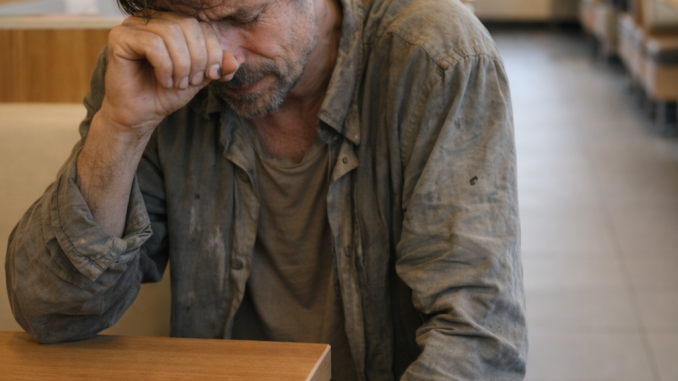
His clothes were worn. His face showed exhaustion. Not aggression. Not threat. Just hunger.
He spoke softly.
He hadn’t eaten in days.
He asked for a little. Just a few fries.
The woman didn’t look at him at first. Then irritation replaced indifference. She told him no. She said she wanted to eat in peace. Within seconds, she stood up, grabbed her bag, and walked out — leaving the untouched food behind.
The man remained standing there for a moment.
Pride and hunger were fighting inside him.
Eventually, hunger won.
He slowly sat down at the booth she had left. He stared at the plate like it didn’t belong to him. Like he was doing something wrong just by looking at it.
He reached for one fry.
Then another.
Suddenly, a waiter approached.
Without anger, without shouting — he took the plate away.
The man froze. Embarrassment hit him harder than hunger ever could.
“I’m sorry,” he whispered. “I’ll leave.”
The plate was gone. The table was empty again.
He lowered his head. For a moment, the noise of the restaurant felt louder than ever. He wiped his eyes quickly, trying not to be seen.
A few minutes later, the waiter returned.
This time, he carried a full tray.
Not leftovers.
Fresh food. A burger. Fries. Soup. Bread. A bottle of water.
He placed it gently in front of the man.
“That plate wasn’t yours,” the waiter said calmly.
“This one is.”
The man looked up, confused at first. Then overwhelmed.
No speech. No dramatic scene. Just quiet gratitude.
In a room full of people, one small act of kindness changed the atmosphere completely.
No one clapped.
No one recorded.
But something important happened.
Someone chose dignity over judgment.
And someone else left that day not just fed — but seen.