A Dangerous Situation on a Quiet Mountain Road
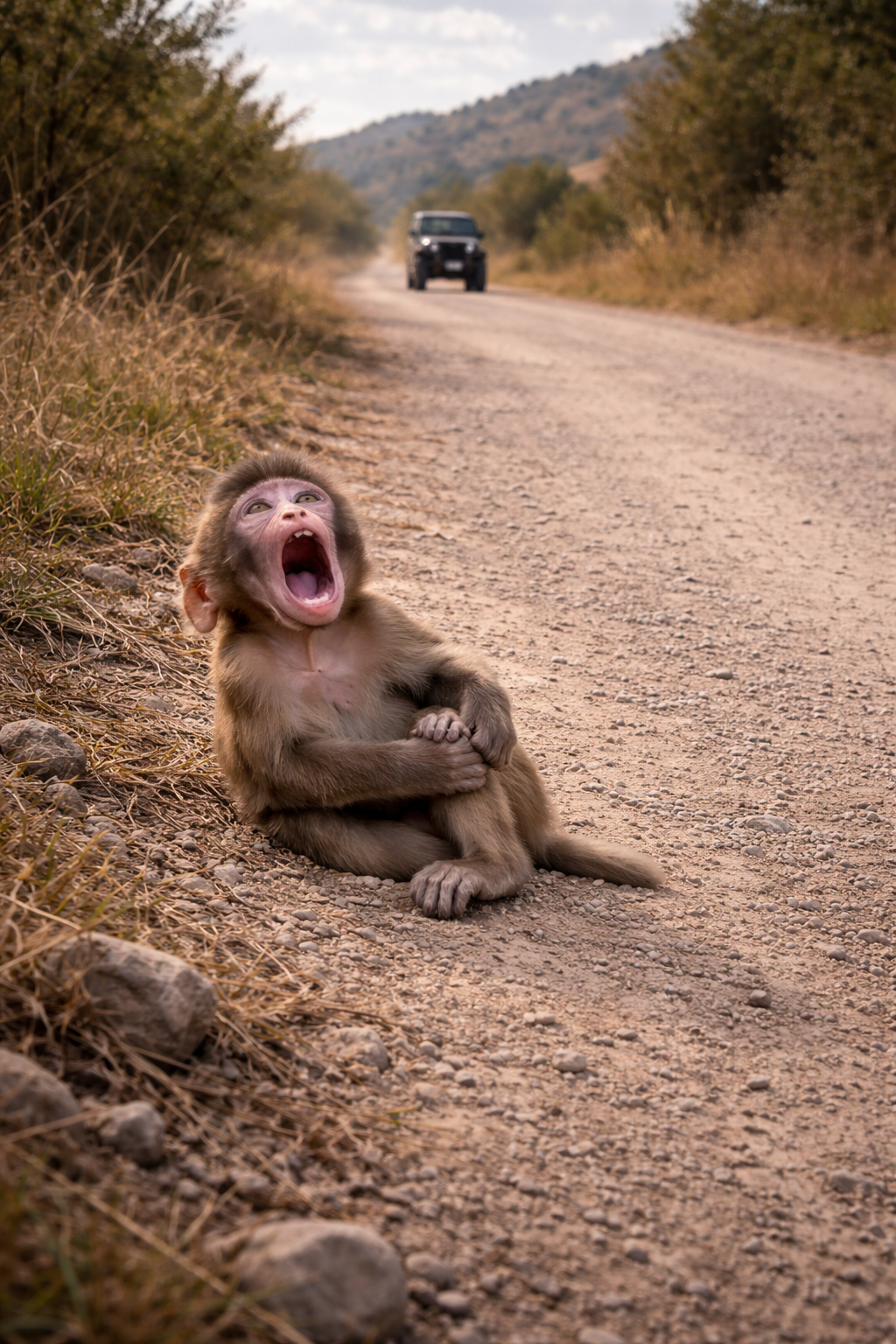
It was a quiet afternoon along a dusty rural road surrounded by dry grass fields and distant hills.
The countryside looked peaceful, but something troubling was happening beside the gravel road.
A small baby monkey sat helplessly near the roadside.
One of its legs was clearly injured, stretched awkwardly and unable to support its body.
The tiny animal cried loudly, its mouth open in pain.
The surrounding area felt isolated.
Tall grass moved slowly in the wind while distant mountains stood silent in the background.
Far down the road, a vehicle approached.
But it was still too far away to notice the suffering animal.
The baby monkey remained alone, frightened and injured.
Cars Pass Without Stopping
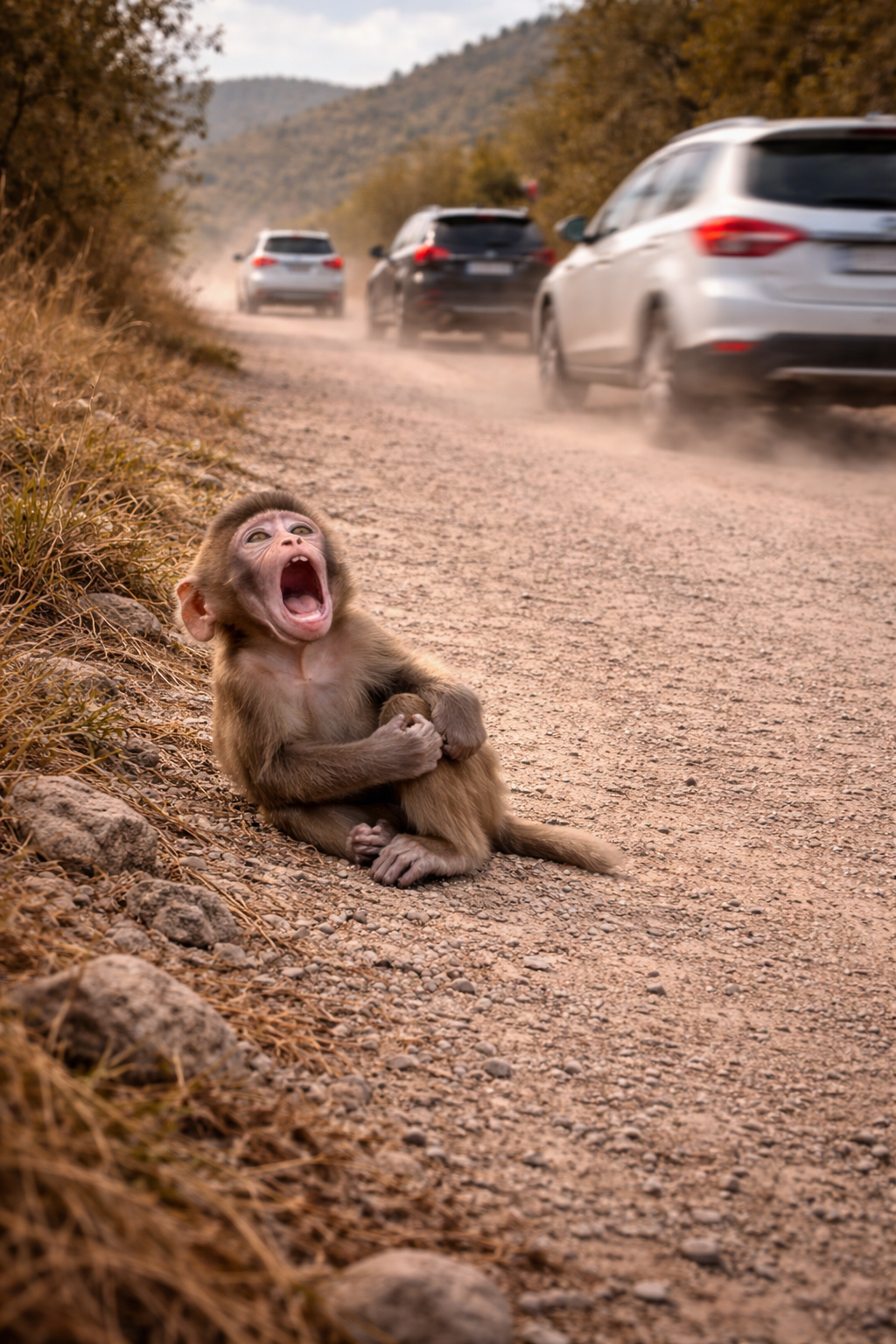
Soon the first car drove past the injured monkey.
Dust rose into the air as the vehicle sped down the dirt road.
The driver never slowed down.
Another vehicle followed soon after.
Then another.
Each one passed quickly without stopping.
The monkey tried to move, but its injured leg prevented it from walking.
It remained on the roadside, weak and scared.
The situation was heartbreaking.
Despite the traffic, no one had stopped to help.
Exhaustion Takes Over
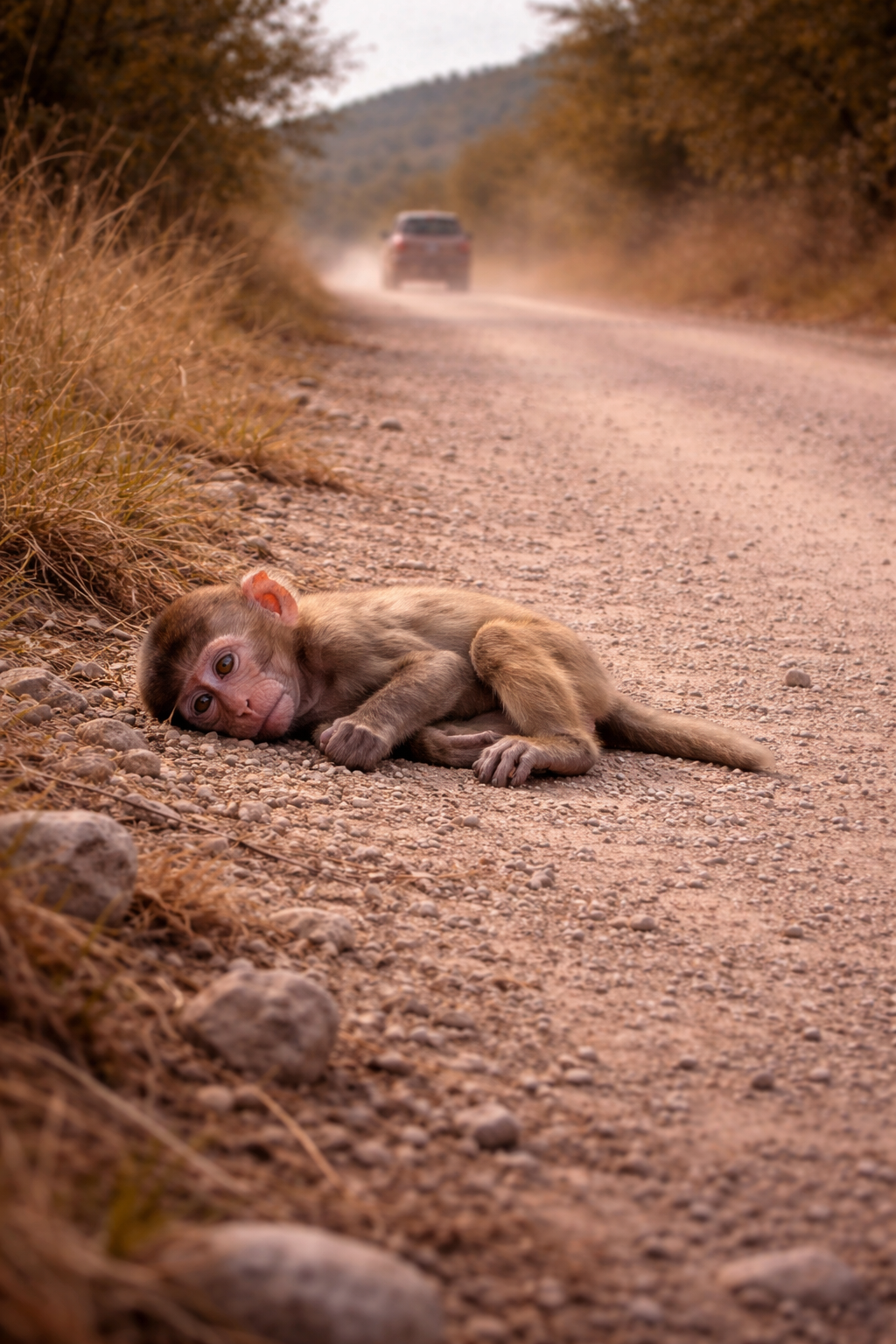
As time passed, the tiny animal grew weaker.
The baby monkey slowly lowered its body to the ground beside the road.
Its breathing became heavier.
The pain in its injured leg made it impossible to move far.
Another car drove past in the background, leaving a cloud of dust behind.
The monkey lifted its head slightly, as if hoping someone might notice.
But once again, the road became quiet.
The small animal was left alone in the open countryside.
A Rider Finally Notices
Moments later, the sound of a motorcycle echoed along the road.
A motorcyclist rode through the countryside surrounded by hills and trees.
As he approached the roadside, something caught his attention.
He saw the small monkey lying near the gravel.
The rider immediately slowed down.
Dust rose slightly as the motorcycle came to a stop.
The man removed his helmet and looked closely at the injured animal.
He understood immediately that the monkey needed help.
A Gentle Rescue
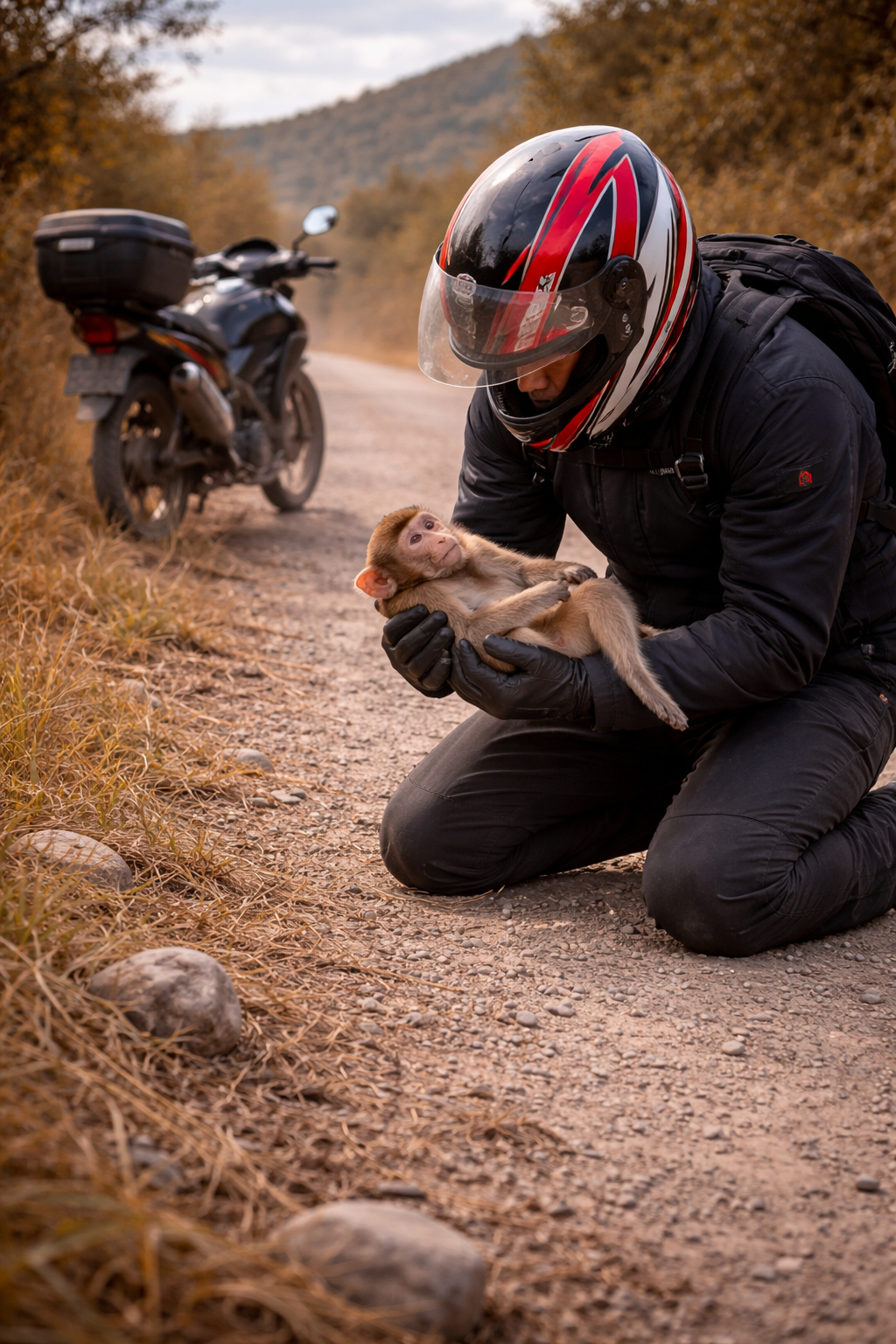
The motorcyclist parked his motorcycle safely beside the road.
He walked slowly toward the injured monkey so he wouldn’t frighten it.
The tiny animal looked weak but did not try to run.
Carefully, the man knelt down and lifted the monkey into his arms.
He supported its injured leg gently to avoid causing more pain.
The monkey seemed calmer once it felt the warmth of the man’s hands.
The road that had once felt dangerous now became the beginning of a rescue.
Hope at the Veterinary Clinic
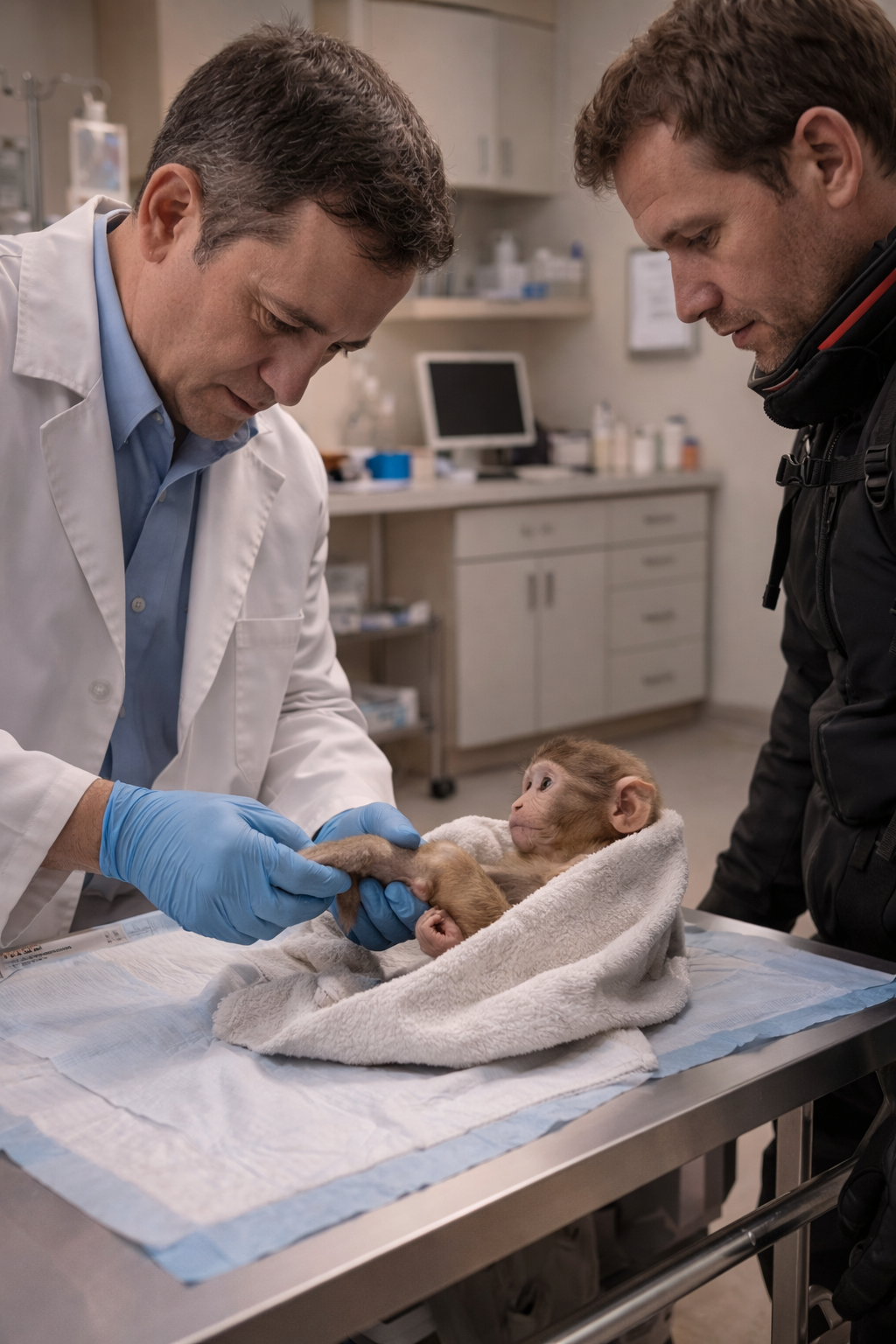
Soon the motorcyclist arrived at a small rural veterinary clinic.
Inside the clinic, soft lights illuminated a clean medical room.
A veterinarian wearing a white coat carefully examined the monkey’s injured leg on a treatment table.
The tiny animal was wrapped in a small towel to keep it warm and calm.
The motorcyclist stood nearby watching with concern.
The veterinarian worked carefully to treat the injury.
What had begun as a desperate situation on a lonely road was now turning into a hopeful rescue story.
Sometimes all it takes is one person willing to stop and care.
And for that little monkey, that one decision made all the difference.
Why Wildlife Rescues Matter
Wild animals living near roads often face serious dangers.
Vehicles, injuries, and isolation can quickly turn small accidents into life-threatening situations.
When people choose to help injured animals, they create opportunities for survival that might not otherwise exist.
Stories like this remind us that compassion can appear anywhere — even on a quiet mountain road.
One simple act of kindness can change the fate of a vulnerable animal.
And sometimes the smallest rescue can inspire many others to care about wildlife protection.