It was one of those winter evenings when the air feels especially cold.
Snow fell steadily outside a small neighborhood diner, covering the sidewalks and quiet streets in white. The soft glow of the neon sign reflected gently on the snow, offering warmth and light to anyone passing by.
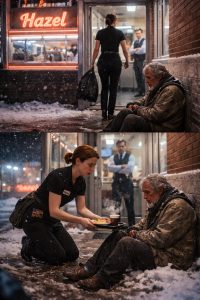
Hazel had just finished a long shift. She tied her hair back, picked up a trash bag, and stepped outside into the chilly air. Her breath turned into mist as she walked toward the back of the building.
That’s when she noticed him.
An elderly man sat quietly against the brick wall. His coat was thin, and snow had begun to settle lightly on his shoulders. His hands moved slightly as he tried to keep warm.
He wasn’t asking for anything.
He wasn’t drawing attention.
He was simply sitting there, trying to get through the evening.
Hazel paused.
Inside the diner, customers enjoyed warm meals and conversation. Coffee machines hummed softly. The contrast was hard to ignore.
She went back inside.
A few minutes later, she returned carrying a warm plate of food and a cup of tea. Steam rose gently from the cup into the cold air as she knelt beside him.
“Here,” she said quietly.
The man looked up with surprise. He accepted the tray carefully, gratitude visible in his expression.
For Hazel, it wasn’t something extraordinary. It simply felt like the right thing to do.
Later that evening, her manager spoke with her about company policies regarding food. The conversation was calm but firm. Hazel listened respectfully.
By the end of her shift, she understood that her decision didn’t align with workplace rules.
The snow continued falling long after the diner closed for the night.
But the next morning, the scene outside looked different.
As daylight spread across the snow-covered street, members of the local community began gathering near the diner. Word had quietly spread about Hazel’s kindness.
People stood outside peacefully — not in protest, but in appreciation.
Hazel stepped outside, unsure of what was happening.
Some offered handshakes. Others simply thanked her.
Among them stood the elderly man from the night before, now wearing a warm donated coat, looking far more comfortable than he had hours earlier.
There were no speeches.
No raised voices.
Just quiet recognition that small acts of care still matter.
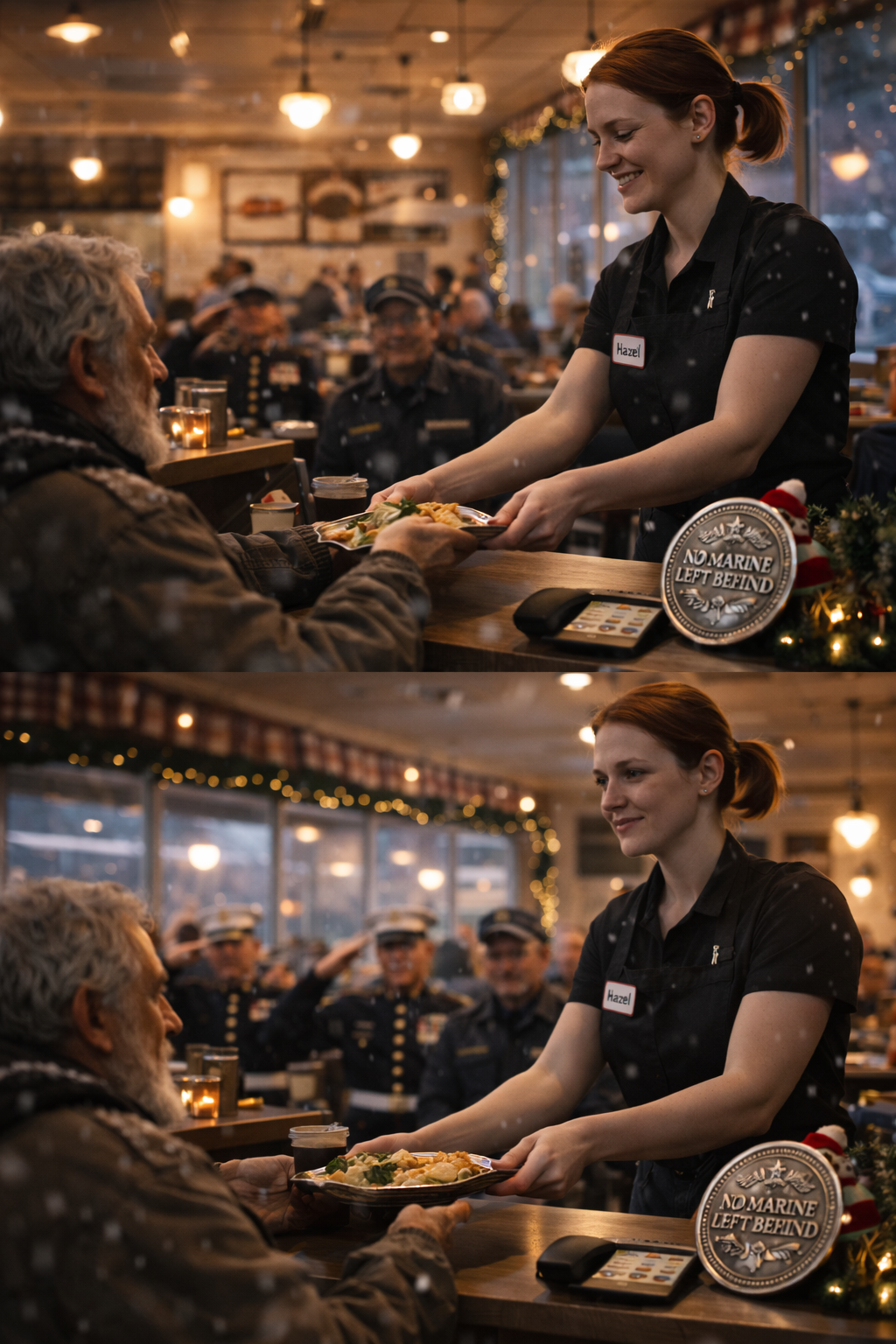
In the days that followed, Hazel was offered new opportunities within the community. She began working at a nearby café that welcomed veterans and neighbors alike.
The space was warm, filled with soft lighting and friendly conversation. Snow still drifted past the windows, but inside there was comfort and calm.
Near the register rested a small engraved coin with a simple message:
“No one left behind.”
Hazel kept it there as a reminder.
Because sometimes change doesn’t arrive dramatically.
Sometimes it begins with something simple.
A warm meal.
A cold evening.
A decision to care.
And sometimes, that’s enough to make a difference.