An Unexpected Conversation in the Hospital Waiting Area
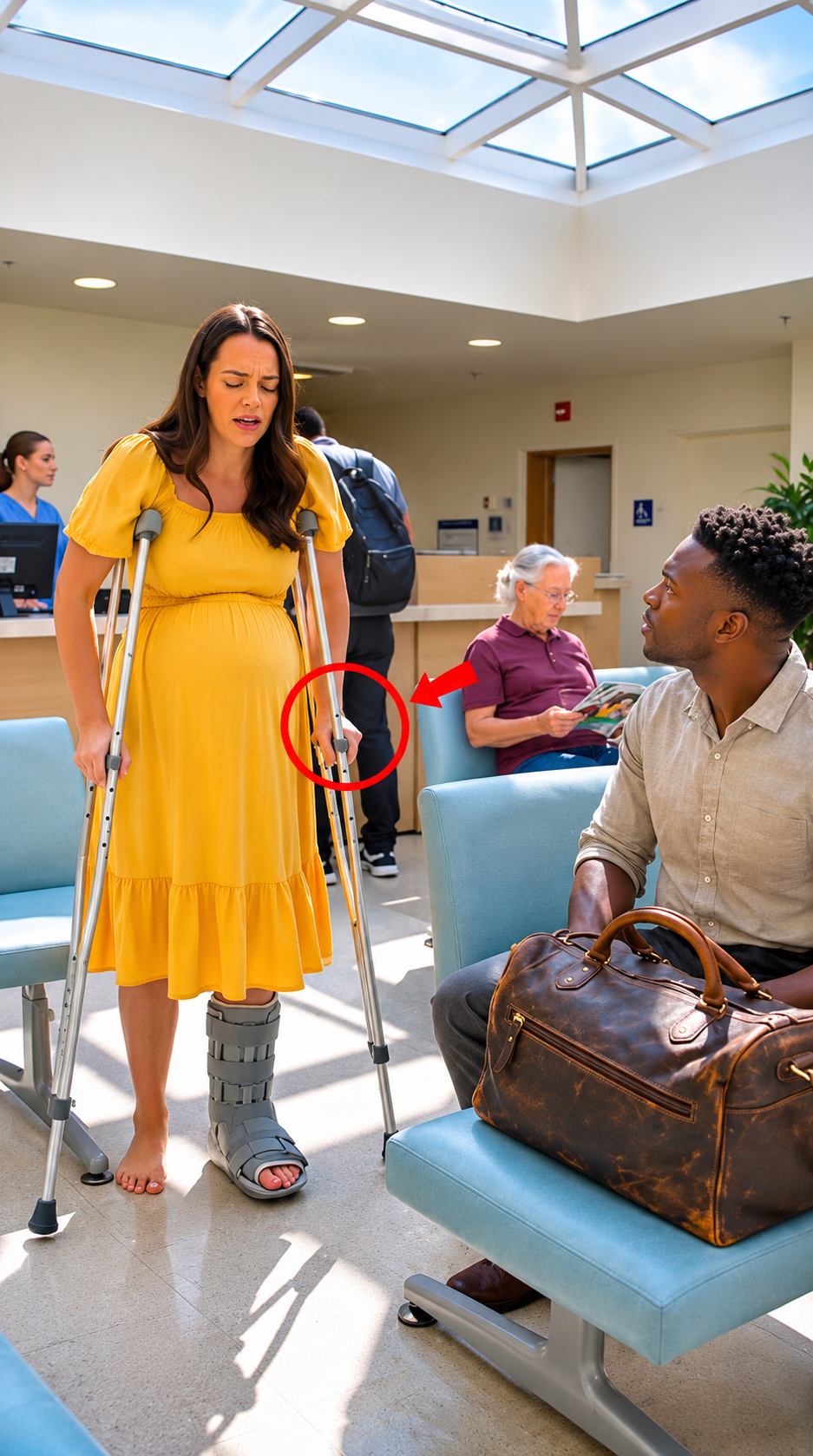
The woman using crutches stopped beside a row of hospital chairs when she noticed another woman sitting alone with a folder of medical papers resting on her lap.
Thirty-six-year-old Hannah Mitchell had arrived for a follow-up appointment after recovering from a leg injury.
She was making her way toward the registration desk when the seated woman looked up and asked whether she needed help.
Hannah smiled and explained that she was managing, although moving through the busy hospital had been tiring.
The seated woman introduced herself as Margaret Ellis, a sixty-eight-year-old retired teacher waiting for an outpatient appointment.
As they spoke, Hannah noticed that Margaret appeared uncertain about the instructions printed on her appointment letter.
Margaret admitted that she had been waiting in the same area for nearly forty minutes.
Before Hannah could suggest speaking with reception, a nurse approached and asked whether either woman needed assistance.
A Morning Filled With Appointments
Hannah had injured her ankle several weeks earlier and had been attending regular follow-up appointments.
Her recovery was progressing, but she still needed crutches to avoid placing too much weight on her injured leg.
That morning, her husband had dropped her near the hospital entrance before leaving for work.
Hannah had expected to reach the outpatient department without difficulty.
However, construction near the main corridor had temporarily changed the usual walking routes.
Several signs directed patients toward a different registration area.
Hannah followed the arrows but eventually found herself in a large waiting room.
She decided to stop briefly before continuing.
Margaret had arrived earlier that morning using a hospital shuttle service.
She had an appointment to discuss the results of routine medical tests.
Although she had visited the hospital before, the temporary changes to the building had confused her.
She believed she was sitting in the correct department.
However, the time printed on her appointment letter had already passed.
Margaret was beginning to worry that she had misunderstood the instructions.
Two Strangers Share Their Concerns
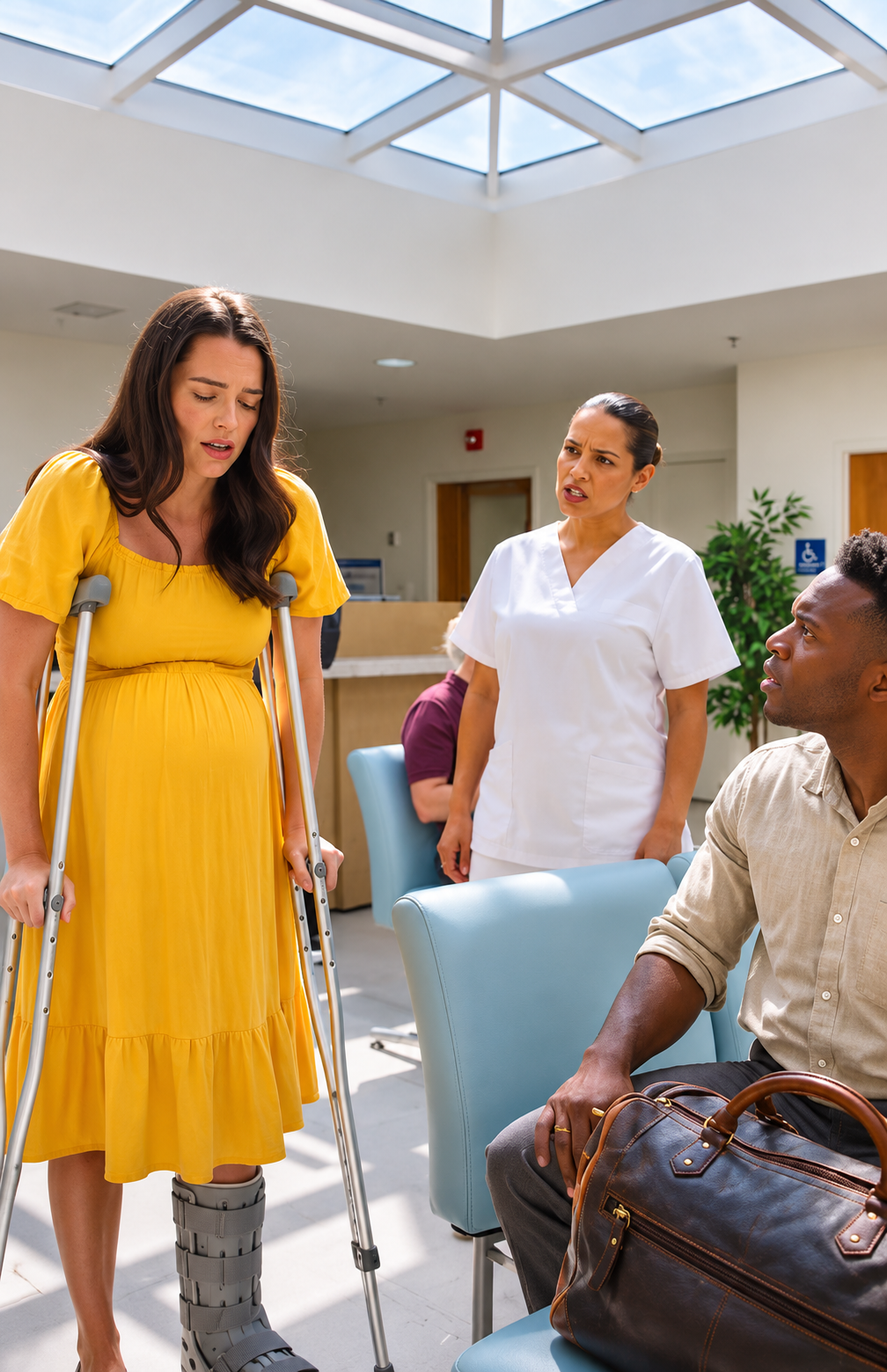
Hannah carefully positioned her crutches beside an empty chair.
Margaret moved her handbag to make room for her.
After sitting down, Hannah thanked the older woman for offering assistance.
Margaret explained that she had always believed people should look out for one another in unfamiliar places.
Hannah noticed the appointment letter resting on Margaret’s folder.
She asked whether Margaret was waiting for a particular doctor.
Margaret explained that she had been referred to the outpatient consultation department.
Hannah recognized the department name from a directional sign she had passed earlier.
She wondered whether Margaret might be waiting in the wrong area.
Rather than guessing, she suggested asking a hospital employee to confirm the appointment location.
Margaret admitted that she had been reluctant to approach the busy reception desk.
She did not want to interrupt staff members who appeared occupied.
Hannah reassured her that helping patients find the correct department was an important part of hospital service.
Margaret smiled and said she appreciated the encouragement.
Their conversation continued as they waited for someone who could provide accurate directions.
A Nurse Notices Their Situation
Nurse Olivia Parker was walking through the waiting area when she noticed Hannah adjusting her crutches beside the chairs.
She approached and asked whether the women were comfortable.
Hannah explained that she was trying to locate the orthopedic outpatient department.
Margaret then mentioned that she might have been waiting in the wrong place.
Olivia listened carefully before examining the appointment information that Margaret offered.
She confirmed that Margaret’s consultation was scheduled in another section of the hospital.
The department was located on the same floor but beyond a connecting corridor.
Olivia explained that the temporary construction signs had confused several patients that morning.
Margaret looked concerned when she realized her appointment time had passed.
Olivia reassured her that she would contact the department before making any arrangements.
She used the hospital’s internal telephone to speak with the outpatient reception team.
After confirming Margaret’s details, Olivia learned that the appointment could still be accommodated.
The nurse also checked Hannah’s appointment location.
Both women needed assistance reaching different departments.
Olivia decided to coordinate their journeys rather than leave them searching through the building.
Practical Assistance Makes the Difference
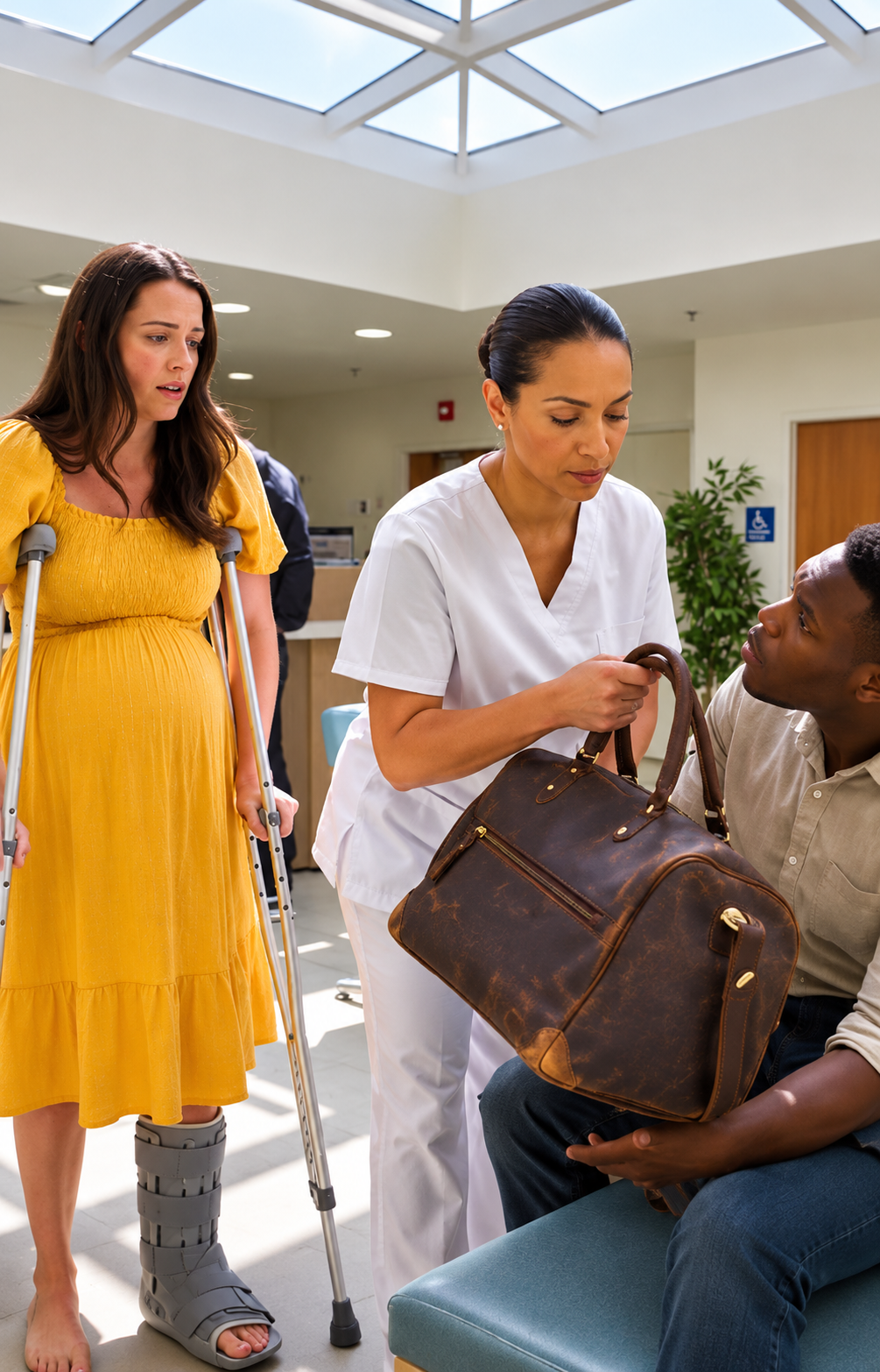
Olivia first asked Hannah whether she felt comfortable continuing to walk with her crutches.
Hannah admitted that her arms were becoming tired after navigating the long corridors.
The nurse offered to arrange a wheelchair for the remaining distance.
Hannah accepted, relieved that she would not need to walk farther than necessary.
Olivia contacted a hospital transport assistant named Daniel Brooks.
Daniel arrived with a wheelchair and helped Hannah settle comfortably after confirming that she was ready.
He placed her crutches securely where they could travel with her.
Meanwhile, Olivia contacted the outpatient department to confirm that Margaret’s appointment remained available.
She then offered to accompany Margaret toward the connecting corridor.
Margaret stood slowly and gathered her documents.
Olivia checked that she had her appointment letter, identification, and personal belongings.
The group moved toward the main corridor together.
At the intersection, Daniel continued with Hannah toward orthopedics while Olivia guided Margaret to her consultation department.
Before separating, Hannah wished Margaret a pleasant appointment.
Margaret thanked her for taking the time to speak with her.
Both women felt more comfortable knowing that hospital staff had helped them reach the correct locations.
A Reassuring Afternoon for Both Patients
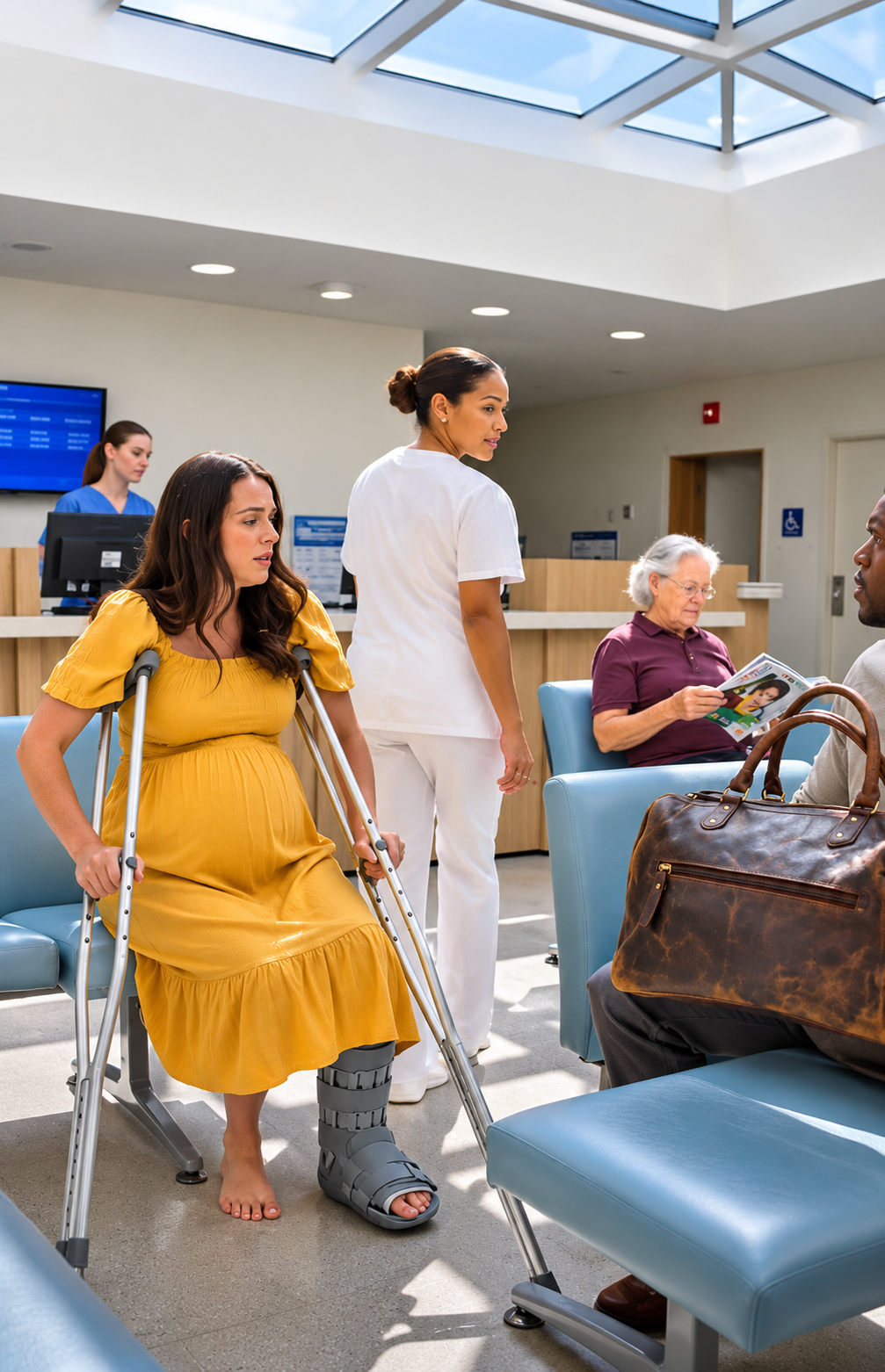
Hannah arrived at the orthopedic department with enough time to complete her registration.
Daniel helped her reach the designated waiting area before returning to his duties.
During her appointment, the clinician reviewed her recovery and discussed the next stage of rehabilitation.
Hannah was pleased to learn that her progress was consistent with the expected recovery plan.
She received updated instructions about activity and follow-up care.
Meanwhile, Margaret met with her doctor in the outpatient consultation department.
The physician explained her test results and answered the questions she had written in her notebook.
Margaret felt relieved after receiving a clear explanation of her next steps.
When her consultation ended, a receptionist helped her confirm the pickup location for the hospital shuttle.
She also received a printed map showing the temporary route through the building.
Before leaving, Margaret asked whether she could thank Olivia for helping her earlier.
The receptionist passed her appreciation along to the nursing team.
Hannah also mentioned the assistance she had received when completing a patient feedback form.
Neither woman expected special recognition for the encounter.
They were simply grateful that a confusing morning had become manageable.
A Small Moment of Kindness Is Remembered
Two weeks later, Hannah returned to the hospital for another follow-up appointment.
She arrived with a clearer understanding of the building’s temporary layout.
Near the outpatient entrance, she noticed a familiar woman sitting beside the reception desk.
Margaret recognized her immediately and greeted her warmly.
The two women exchanged updates about their appointments.
Margaret explained that she had followed her doctor’s recommendations and was feeling more confident about her care plan.
Hannah shared that her ankle was improving and that she hoped to begin walking without crutches when medically appropriate.
As they spoke, Olivia passed through the corridor.
She recognized both patients and stopped to say hello.
Margaret thanked her again for making sure she had not missed her consultation.
Hannah expressed appreciation for the wheelchair assistance and clear directions.
Olivia smiled and explained that the hospital team wanted patients to feel supported throughout their visits.
This fictional story began when a woman using crutches stopped beside another patient in a hospital waiting area.
Their conversation revealed that both women needed help navigating the building.
A nurse arrived, listened to their concerns, and coordinated practical assistance.
Because the staff responded promptly, Hannah and Margaret reached their appointments safely and received the care they had come for.
Before leaving, the women exchanged friendly goodbyes and continued toward their separate departments.
What began as a brief conversation between two strangers became a reminder that thoughtful attention and practical help can make an unfamiliar hospital feel a little more welcoming.