An Unexpected Encounter on the Station Platform
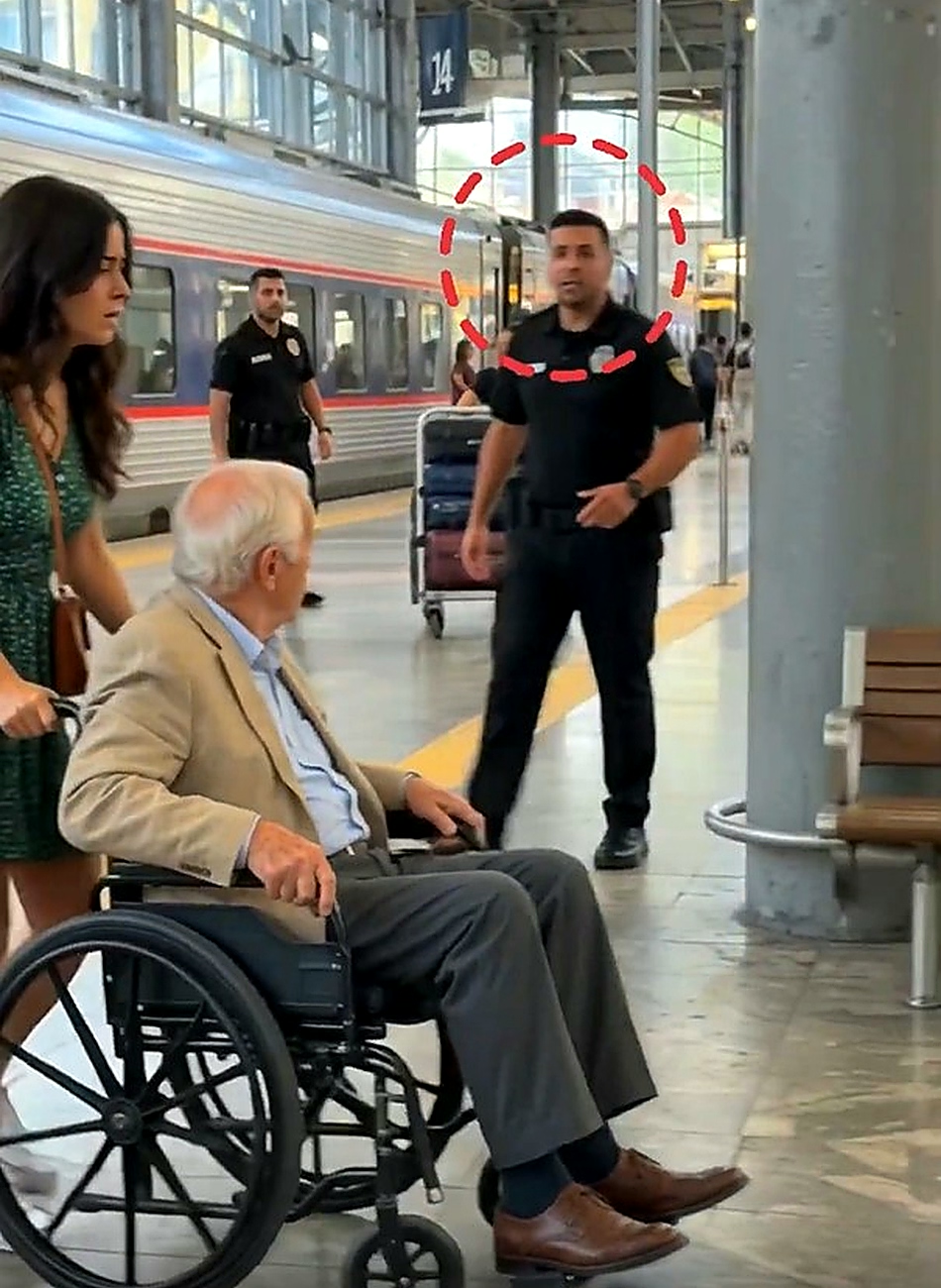
The police officer approached just as the woman began pushing the wheelchair toward the departing train.
“Excuse me, could you stop for a moment?” he asked.
The woman, Natalie Foster, immediately stopped and looked at the officer with concern.
Beside her, eighty-one-year-old Henry Collins held a small suitcase across his knees.
They had less than fifteen minutes before their train was scheduled to depart.
Officer James Walker glanced at the wheelchair and asked whether they were traveling together.
Natalie explained that she was helping Henry reach his train.
James noticed something unusual about the elderly man’s ticket.
The departure station printed on it did not match their current location.
Henry leaned forward and insisted that he had purchased the correct ticket.
Natalie looked confused, explaining that they had already checked the departure board.
James asked to examine the reservation before they continued.
Something about the journey required immediate clarification.
A Journey That Had Taken Months to Arrange
Henry had been preparing for this trip since the beginning of summer.
He was traveling to visit his younger sister, Margaret, whom he had not seen in seven years.
Margaret lived in a small coastal town several hours away.
They had remained close through telephone calls and handwritten birthday cards.
However, Henry’s reduced mobility had made long-distance travel increasingly difficult.
Natalie worked as a volunteer with a community transportation organization.
She had met Henry several months earlier while helping older residents attend medical appointments.
When she learned about his wish to visit Margaret, she offered to help organize the journey.
Together, they had reviewed train schedules, accessibility arrangements, and available transportation assistance.
Henry had saved money for the ticket and reserved an accessible seat.
He had also packed a small wooden picture frame containing a photograph of their parents.
He wanted to give it to Margaret during their reunion.
That morning, Natalie had collected him from his apartment and driven to the station.
Everything appeared organized until the officer approached them near the platform entrance.
The Ticket Reveals a Complicated Mistake
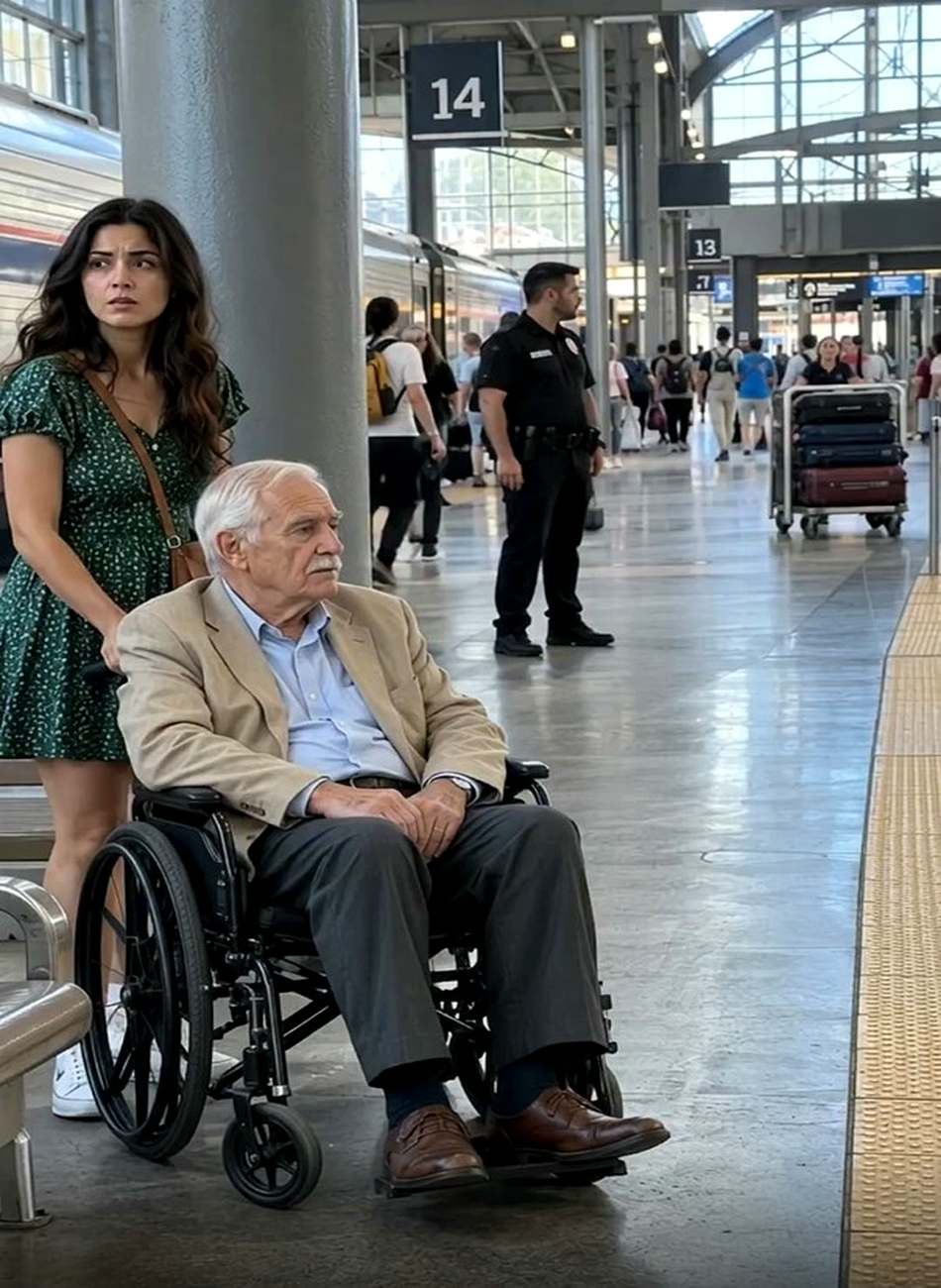
James examined the printed reservation and compared it with the station’s departure information.
The ticket listed Central Junction as the starting point.
However, Natalie and Henry were standing at Riverside Station, nearly twenty miles away.
Natalie explained that the booking website had displayed Riverside as their departure location.
James noticed that the reservation included a separate connecting journey.
The first portion required a regional train from Riverside to Central Junction.
Unfortunately, that connecting service had departed almost an hour earlier.
Henry looked down at the ticket, disappointed by the discovery.
He had carefully followed every instruction he believed was necessary.
Natalie checked her phone and found the original booking confirmation.
The connection appeared in smaller text beneath the main reservation details.
She realized that she had overlooked it while planning their arrival time.
James reassured them that the mistake could still have a solution.
He suggested speaking with the station’s passenger assistance team before purchasing another ticket.
Natalie agreed, although she worried that Henry would become exhausted waiting for another service.
James contacted the station supervisor and explained the situation.
A New Problem at the Assistance Desk
The station supervisor, Rachel Morgan, arrived carrying a tablet with updated train information.
She reviewed Henry’s reservation and checked the remaining departures.
Another regional train could reach Central Junction later that morning.
However, the original long-distance connection would already have departed.
Rachel contacted the railway’s customer assistance department to discuss alternative arrangements.
She explained that Henry required wheelchair-accessible boarding and suitable seating throughout the journey.
The next available long-distance train had accessible accommodation, but its reservation needed confirmation.
Natalie asked whether they could simply travel without changing the booking.
Rachel explained that accessibility arrangements required coordination with the train crew.
She wanted to ensure that Henry could board and leave the train safely.
James remained nearby while the railway staff checked the options.
Henry quietly admitted that he was beginning to wonder whether the trip was worth continuing.
Natalie knelt beside his wheelchair and reminded him how much Margaret was looking forward to seeing him.
James suggested that they wait in the quieter passenger lounge while arrangements were completed.
Rachel promised to return as soon as she received confirmation.
A Police Officer Helps Them Continue
Twenty minutes later, Rachel returned with encouraging news.
The railway had approved a revised itinerary and confirmed an accessible seat.
The new journey would arrive later than planned, but Henry could still reach Margaret that evening.
Rachel arranged boarding assistance for the regional train and the connecting service.
She also contacted the destination station to request support when Henry arrived.
Natalie thanked her and carefully placed the updated tickets inside Henry’s travel folder.
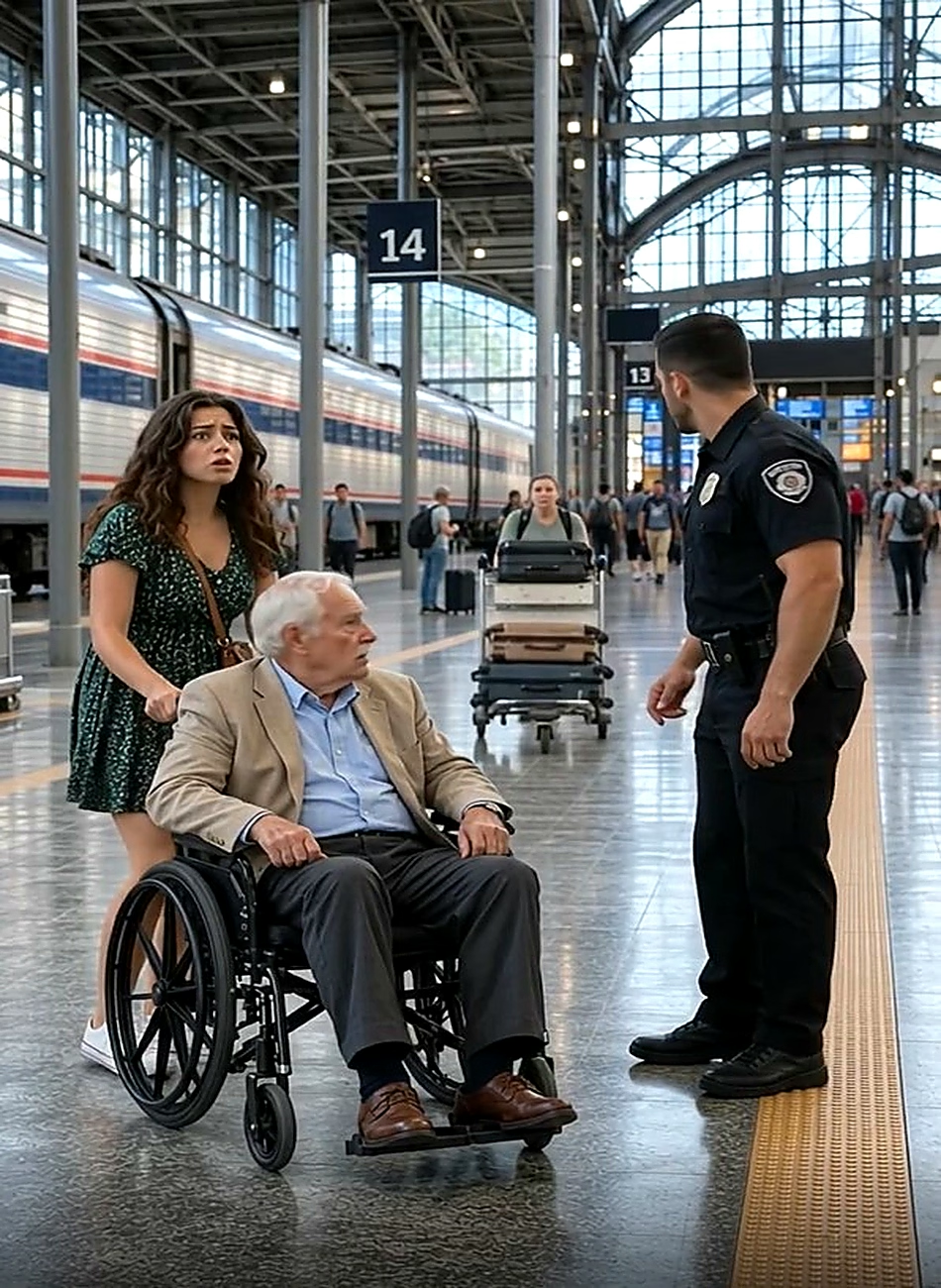
James offered to escort them toward the correct platform.
As they approached the elevator, he noticed that the usual accessible route was temporarily closed for maintenance.
Rather than attempting an unsuitable shortcut, he contacted station staff for an alternative route.
A railway employee directed them toward another elevator at the opposite end of the concourse.
James accompanied them while Natalie pushed Henry’s wheelchair.
At the platform, two trained railway employees prepared the approved boarding equipment.
They assisted Henry into the accessible carriage and confirmed that his wheelchair was safely positioned.
Natalie boarded beside him and placed their luggage in the designated storage area.
Before the doors closed, Henry thanked James for stopping them.
The officer smiled and wished them a pleasant reunion.
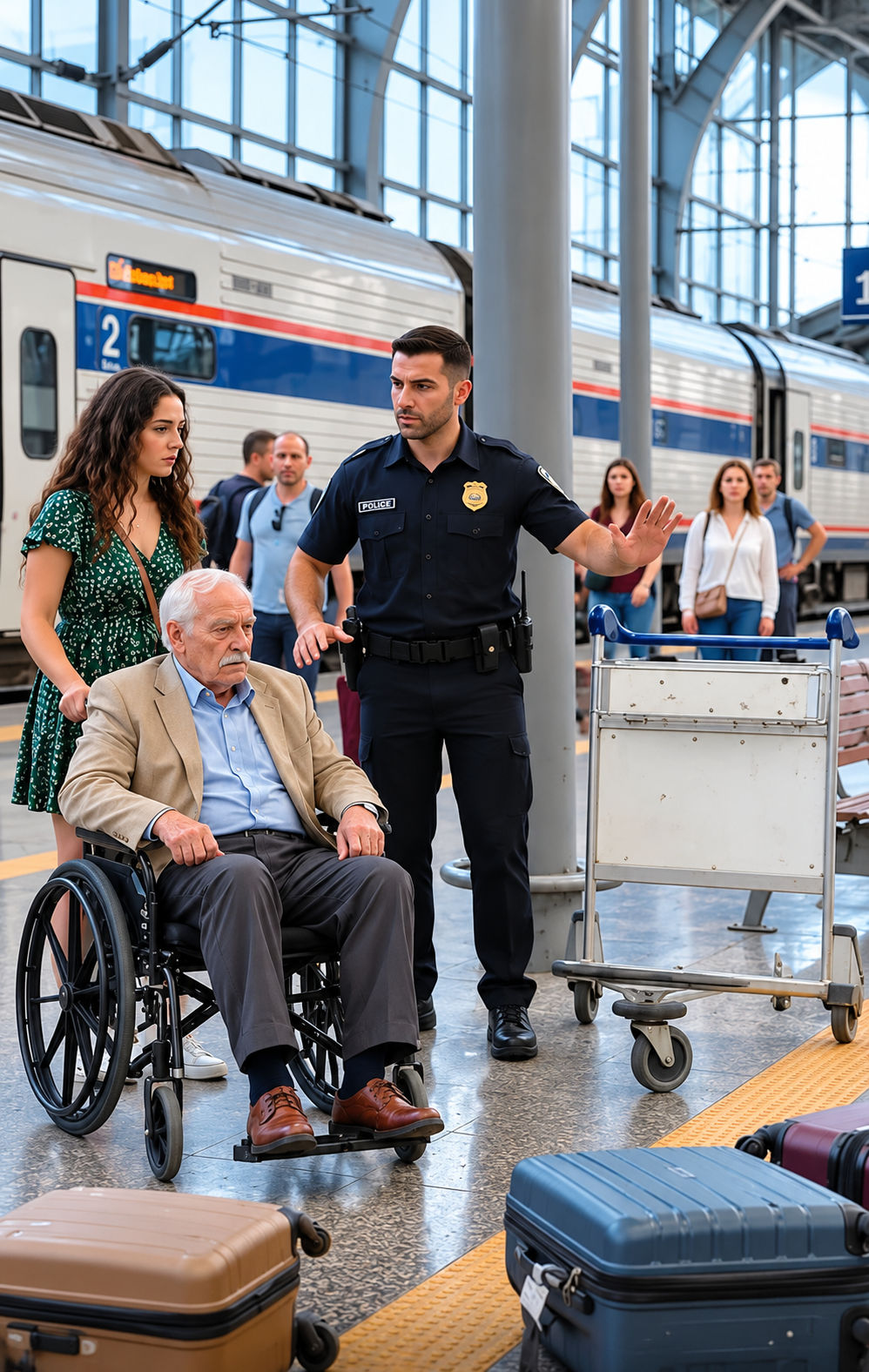
A Long-Awaited Reunion at the Coast
The revised journey took several hours, including a comfortable transfer at Central Junction.
Natalie kept Margaret informed about their progress through occasional telephone calls.
Henry spent much of the trip looking through old family photographs.
He told Natalie stories about growing up with Margaret in a small countryside home.
They had shared a bedroom during childhood and attended the same village school.
Although their lives eventually took them to different cities, they had remained close.
When the train reached the coastal station, railway staff assisted Henry onto the platform.
Margaret was waiting near the entrance with her daughter, Susan.
She recognized her brother immediately and hurried toward his wheelchair.
Henry smiled as Margaret embraced him.
For several moments, neither seemed interested in discussing the difficult journey.
They were simply pleased to be together again.
Later, at Margaret’s home, Henry presented the wooden picture frame he had carried throughout the trip.
Margaret recognized the photograph of their parents and placed it on the living room mantel.
The siblings spent the evening sharing memories while Natalie enjoyed dinner with the family.
A Letter of Thanks and a New Tradition
Three days later, Natalie accompanied Henry on the return journey.
This time, every connection and accessibility arrangement had been confirmed in advance.
The trip proceeded smoothly, and Henry returned home feeling encouraged by the experience.
He immediately began planning another visit for the following spring.
Natalie suggested creating a simple travel checklist to prevent future booking misunderstandings.
Together, they included departure stations, connection times, accessibility confirmations, and emergency contact numbers.
Henry also wrote a thank-you letter to the railway staff who had assisted him.
He included a separate message for Officer James Walker.
The letter explained how an unexpected conversation had prevented them from following the wrong travel plan.
James later received the message through the station’s community policing office.
He was pleased to learn that Henry had reached his sister safely.
This fictional story began when a police officer stopped a woman pushing an elderly man toward a train.
His questions revealed a missed connection that could have complicated their journey.
With help from railway staff, they arranged suitable transportation and continued their trip.
Henry reunited with Margaret and returned home with renewed confidence about traveling.
The experience reminded Natalie that careful preparation and clear communication were essential when assisting passengers with mobility needs.
What first seemed like an inconvenient interruption became the moment that helped an elderly brother reach the sister he had waited years to embrace.