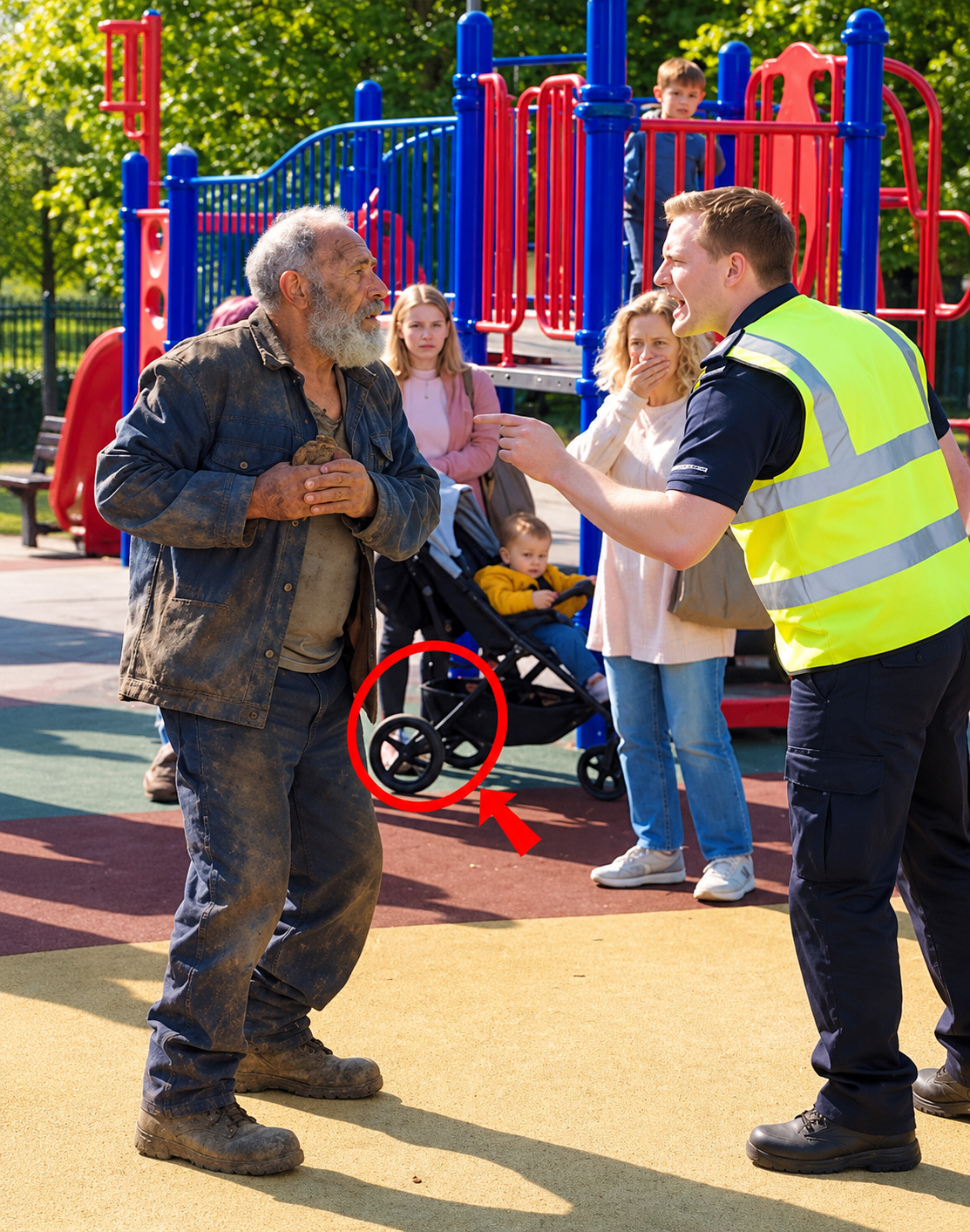
An Unexpected Conversation at a Neighborhood Playground
The elderly man stood beside the playground fence, holding a faded photograph of a wooden swing set.
Seventy-eight-year-old Henry Lawson had arrived at Riverside Community Park shortly after nine on a quiet Saturday morning.
He watched a maintenance worker inspect the playground equipment before the first families arrived.
The worker, thirty-two-year-old Daniel Carter, noticed Henry studying the empty swings with unusual attention.
Daniel approached and politely asked whether he needed assistance.
Henry explained that he was searching for something connected to his childhood.
He showed Daniel the photograph, which pictured three children standing beside an old wooden climbing frame.
Daniel recognized the background but explained that the original equipment had been replaced decades earlier.
Henry nodded, disappointed but understanding.
As they continued talking, an older woman carrying a canvas shopping bag stopped near the playground entrance.
She looked at the photograph and suddenly recognized one of the children.
A Photograph From Another Time
The woman introduced herself as Margaret Ellis, a retired elementary school teacher who lived nearby.
She asked Henry whether the photograph had been taken during the summer of 1958.
Henry looked surprised and confirmed that the date sounded correct.
Margaret pointed toward a little girl standing beside the climbing frame.
She explained that the girl was her younger sister, Helen.
Henry studied the photograph again, remembering a cheerful child who often organized neighborhood games.
He asked whether Margaret had also lived near the park.
She explained that her family had occupied a small house across the street.
Henry remembered the house immediately because its front porch had been painted bright yellow.
Margaret laughed and said her father had insisted on repainting it every spring.
Daniel listened with interest as the two older visitors exchanged memories.
He explained that the parks department was preparing a community history display for the playground’s anniversary.
Henry glanced toward the modern equipment and asked whether old photographs might be useful.
Daniel assured him that the department welcomed historical materials from neighborhood residents.
Margaret suggested that the photograph might reveal more than either of them initially realized.
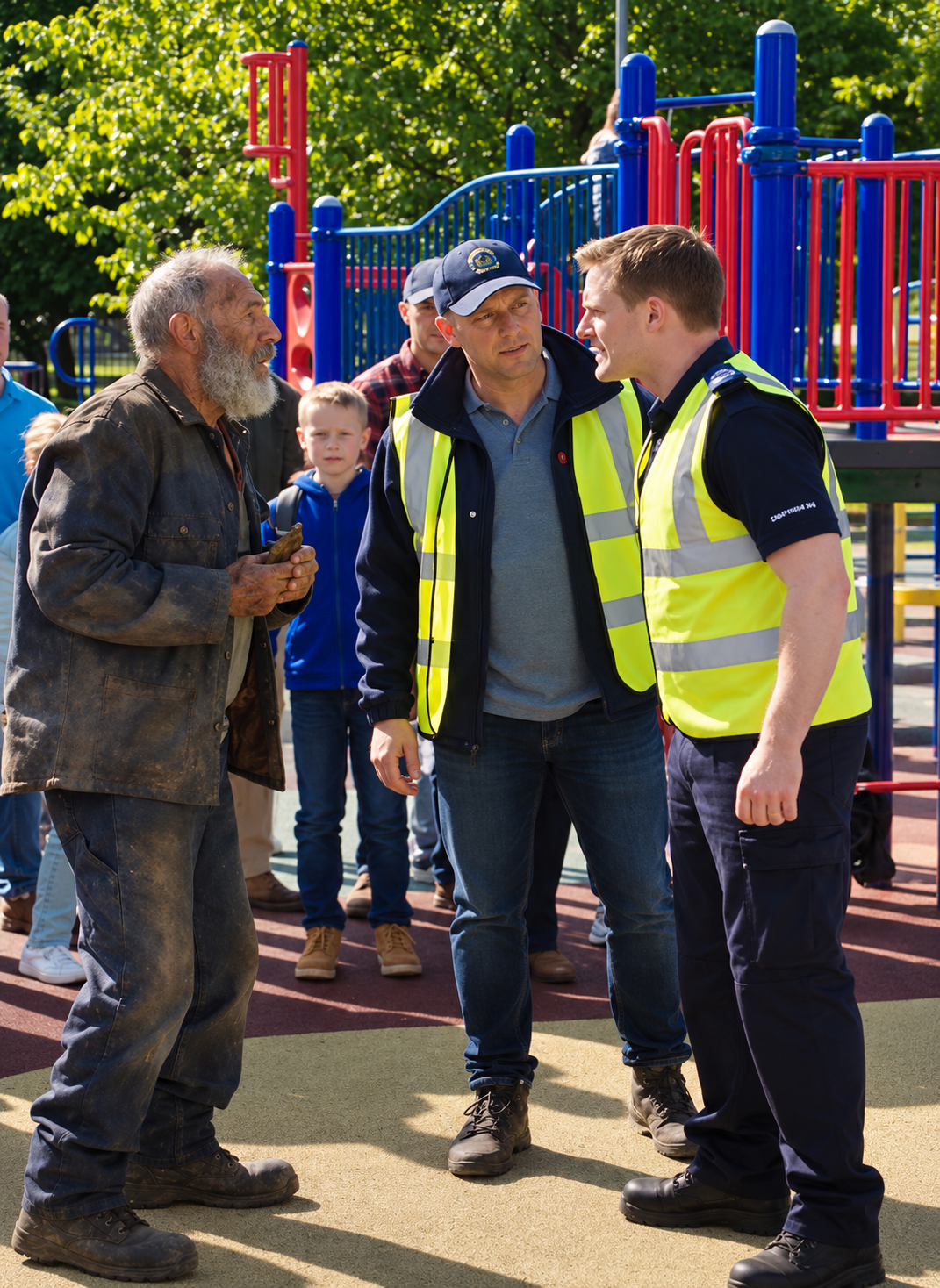
An Old Memory Begins to Return
Henry explained that he had returned to the neighborhood after living elsewhere for nearly fifty years.
His daughter had recently moved nearby, giving him a reason to revisit familiar places.
He had found the photograph while sorting through boxes in his former home.
The picture reminded him of his childhood friend, Thomas Reed, who appeared beside the climbing frame.
Thomas had moved away suddenly when his family relocated for work.
Henry had never learned what happened to him afterward.
Margaret examined the photograph and said she remembered Thomas as a quiet boy who loved building things.
She recalled that he often repaired broken toys for younger children.
Henry smiled, remembering a wooden wagon Thomas had constructed from discarded boards.
Daniel asked whether the photograph contained any writing on the back.
Henry carefully turned it over and revealed a faded pencil inscription.
The words included several names and the date of a neighborhood picnic.
Margaret recognized the handwriting as belonging to her mother.
She explained that her mother had helped organize community gatherings at the park.
Henry wondered whether the photograph had originally belonged to Margaret’s family.
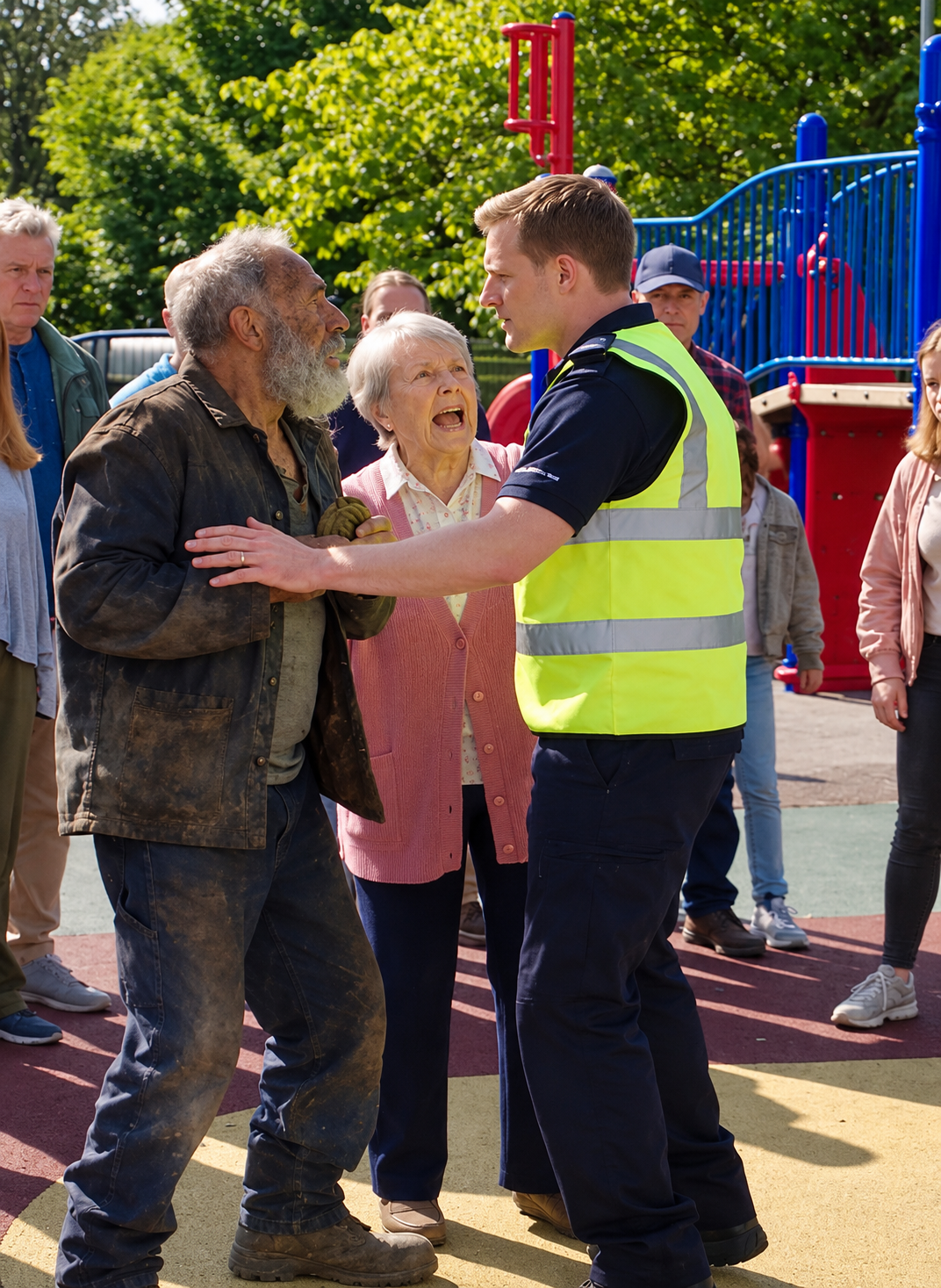
A Discovery Near the Old Pavilion
Daniel mentioned that the park’s original picnic pavilion still stood beyond the playground.
Although renovated several times, its stone foundation remained largely unchanged.
Margaret asked whether they could walk over and look at it.
Henry agreed, and Daniel accompanied them after completing his equipment inspection.
They followed the paved pathway toward a small shelter surrounded by mature trees.
Henry stopped beside the entrance and studied the stonework.
He remembered helping Thomas collect fallen branches near the pavilion during summer celebrations.
Margaret recalled that their families had gathered there for birthdays and neighborhood meetings.
Daniel pointed toward a historical information board installed beside the shelter.
The board displayed photographs collected during an earlier preservation project.
One picture showed a group of volunteers repairing playground equipment in the early 1960s.
Henry leaned closer and recognized a familiar face standing near a wooden bench.
He believed the young volunteer might be Thomas’s older brother, William.
Margaret remembered William working with the local recreation committee.
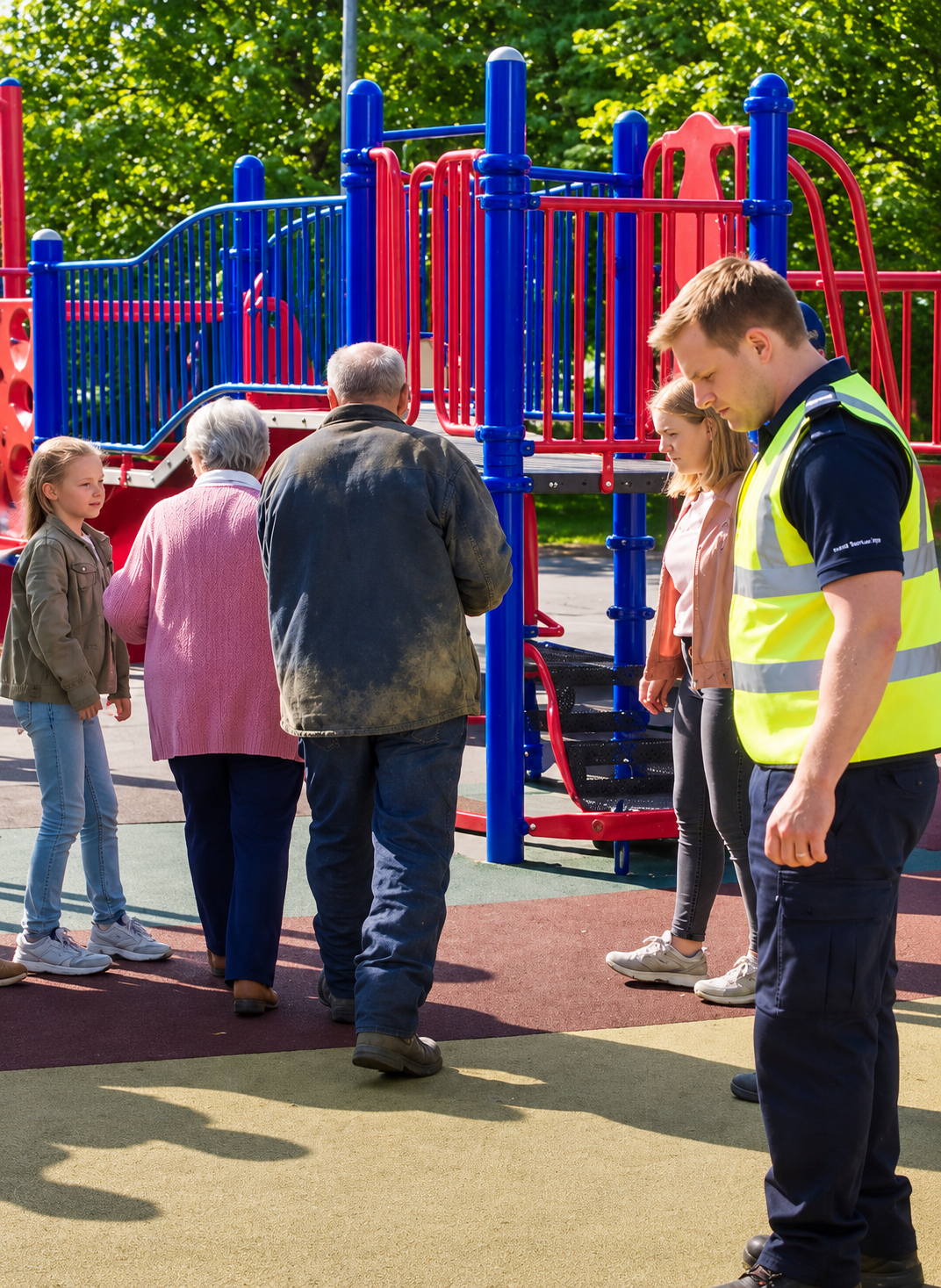
A Helpful Worker Makes an Unexpected Connection
Daniel called his supervisor, Rebecca Morgan, and explained the visitors’ discovery.
Rebecca confirmed that the parks department had collected several boxes of historical documents.
She suggested contacting the neighborhood heritage center, which managed the digitized collection.
Daniel wrote down the center’s public telephone number for Henry and Margaret.
Margaret remembered volunteering there several years earlier.
She explained that the center sometimes organized events where residents identified people in old photographs.
Henry appeared interested but admitted that he was unfamiliar with digital archives.
Daniel offered to show him how to search the public collection using the park’s information kiosk.
The three returned to the playground entrance, where a small visitor center had recently opened.
Inside, Daniel selected the historical photographs section and entered the park’s name.
Several images appeared, including a neighborhood picnic from the same summer as Henry’s photograph.
Margaret recognized her parents standing beside a picnic table.
Henry spotted Thomas near the edge of the picture.
A Community Story Finds a New Beginning
Over the following weeks, Henry and Margaret visited the heritage center together.
They helped identify several people in photographs that had remained unlabeled for years.
The center discovered a newspaper article describing the playground’s original dedication ceremony.
The article included a photograph of Thomas’s father standing beside the completed climbing frame.
Henry was delighted to see another image connected to his childhood.
The center also located a public memorial notice confirming that Thomas had become a school woodworking instructor.
Although Thomas had passed away several years earlier, the notice mentioned his lifelong dedication to teaching.
Henry felt sadness at the news but appreciated learning how his friend’s life had unfolded.
Margaret reminded him that Thomas had always enjoyed helping other children build things.
Daniel arranged for copies of the historical photographs to appear in the anniversary exhibition.
This fictional story illustrated how everyday conversations could preserve memories that might otherwise disappear.
Henry had arrived at the playground searching for a small piece of his past.
Margaret had recognized a photograph that connected their childhood experiences.
Daniel had listened carefully and helped them find the resources needed to understand its history.
On the anniversary morning, families gathered beside the playground to view the completed display.
Henry stood near the photographs while children played on the modern swings.
Margaret joined him and pointed toward the picture of their childhood friends.
Daniel watched as several parents stopped to read the stories behind the original playground.
Henry smiled, realizing that the place still brought neighbors together after so many decades.
An old photograph and a thoughtful conversation had transformed one man’s private memories into a lasting gift for the entire neighborhood.