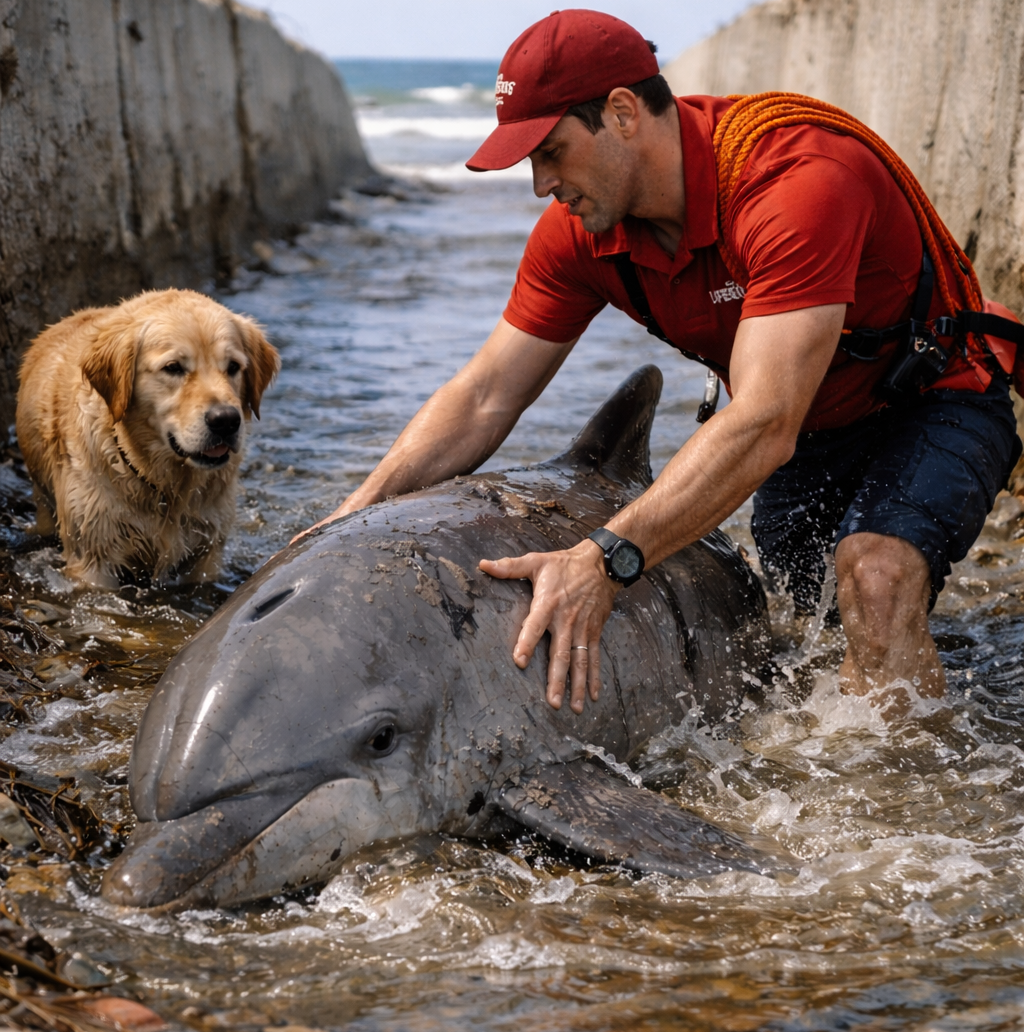
Something about the water didn’t look right.
The canal was quiet, the surface barely moving, but something felt off beneath that stillness.
From a distance, it looked like nothing more than debris caught in shallow water.
But the closer you looked, the clearer it became—this wasn’t something that could fix itself.
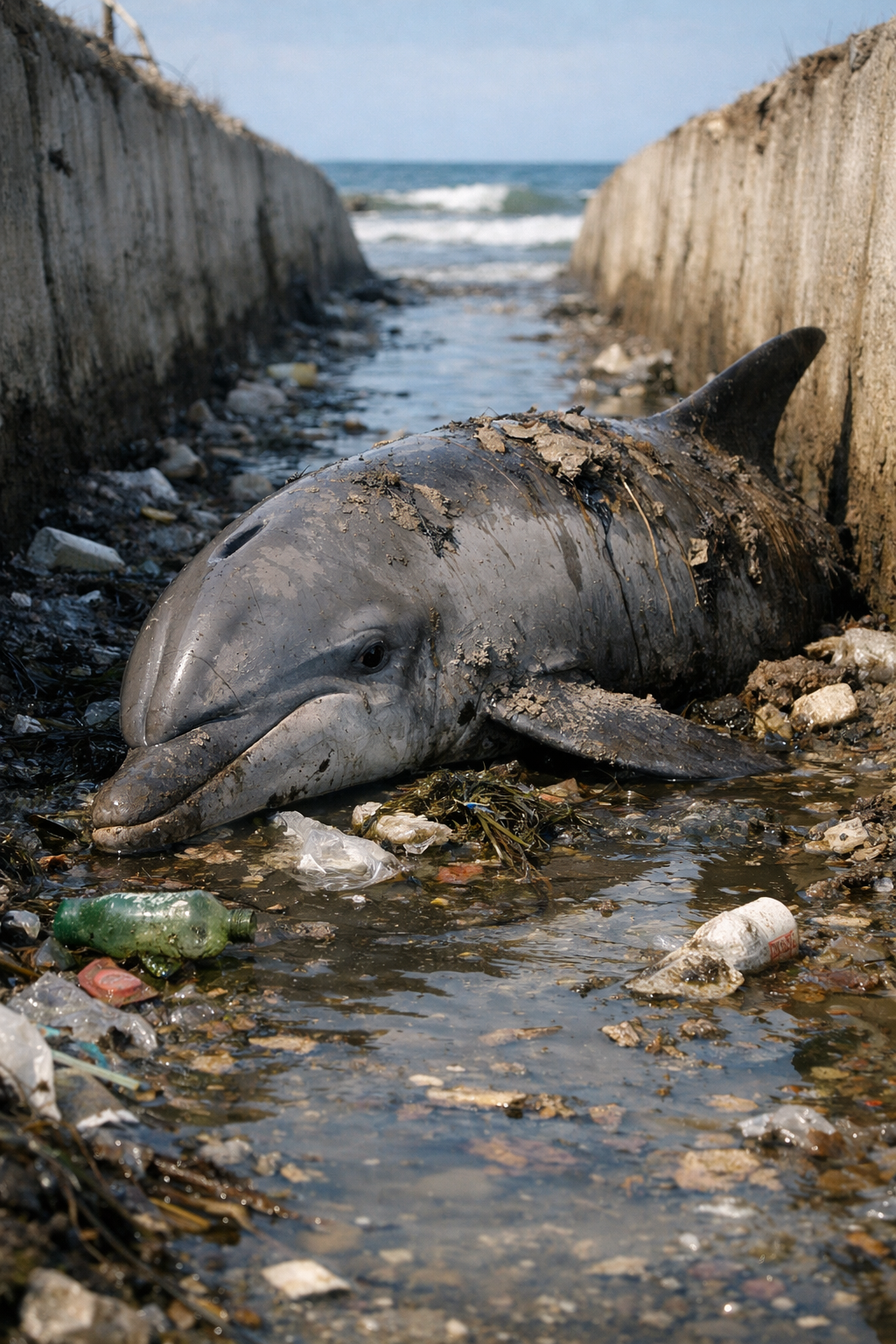
The dolphin was stuck.
Its body lay sideways in the narrow concrete canal, partially covered in mud, plastic waste, and seaweed. The water around it was shallow and dirty, not nearly enough to support its movement. Every attempt to shift only made things worse, its body pressing against the hard surface beneath it.
Its breathing was visible.
Slow.
Heavy.
And controlled in a way that showed it was trying to conserve energy.
In the distance, beyond the canal, the ocean could be seen. Open water, deep and blue, just far enough away to feel unreachable.
The contrast was harsh.
Freedom was visible.
But not accessible.
When something notices what others don’t
The area wasn’t crowded. There were no immediate signs of people nearby, no movement suggesting that help was on the way.
But something else was there.
A golden retriever stepped carefully into the shallow water.
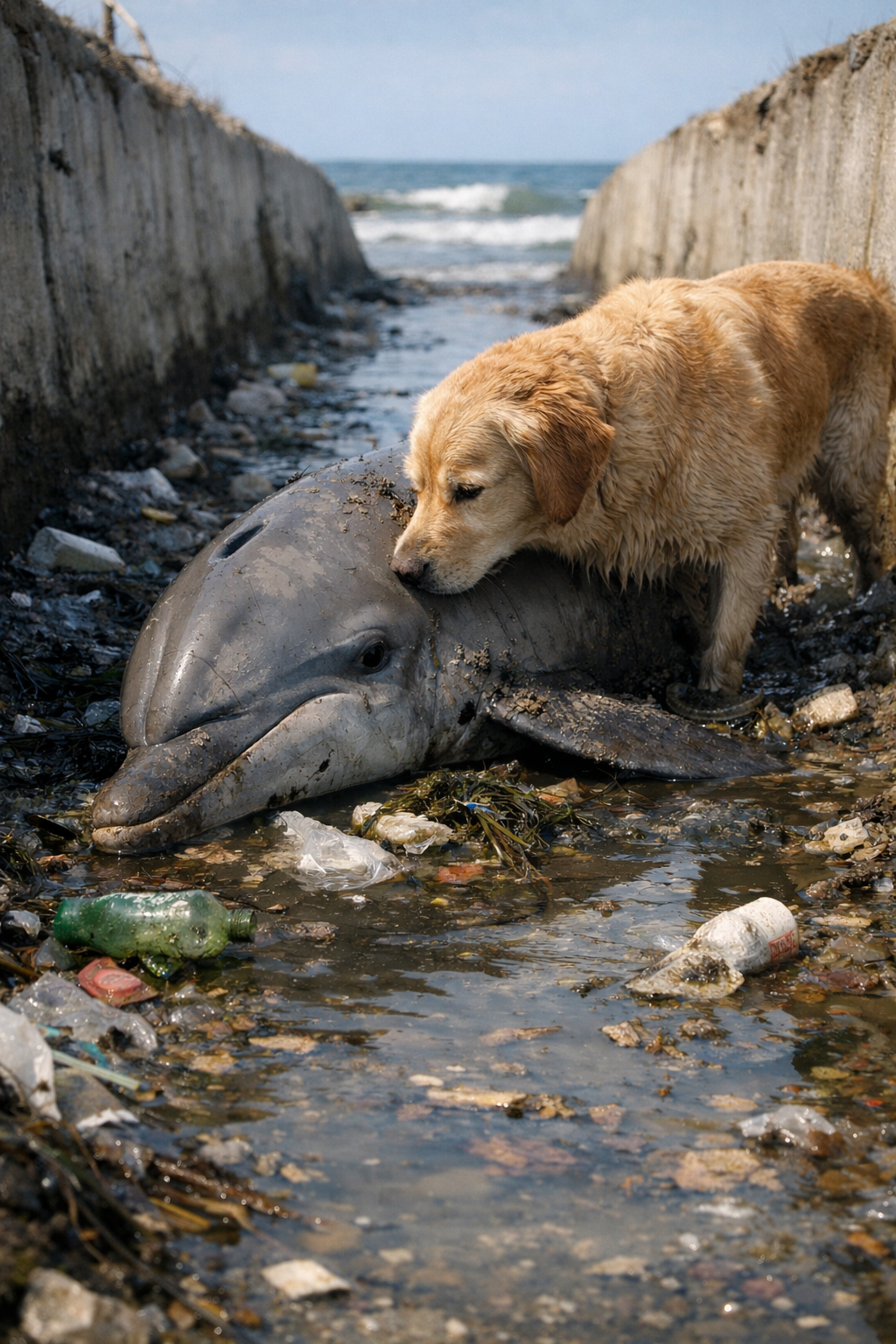
The dog moved slowly, not jumping or reacting wildly. Its posture was different—focused, aware, almost cautious. It approached the dolphin and stopped close enough to observe.
It sniffed near the dolphin’s head.
The dolphin barely reacted.
That was enough.
The dog understood something was wrong.
A decision without hesitation
The dog didn’t stay.
It didn’t wait.
It turned immediately and ran.
Water splashed behind it as it moved quickly through the canal and onto the open beach. Its pace increased as it reached dry sand, heading directly toward a lifeguard station visible in the distance.
The movement wasn’t random.
It had direction.
Purpose.
Urgency.
When urgency becomes communication
At the lifeguard station, the dog didn’t slow down. It barked loudly, circling, pulling attention toward itself. The lifeguard turned, confused at first, then focused as the dog continued insisting.
This wasn’t normal behavior.
The dog moved away, then back again, clearly signaling for the lifeguard to follow.
And this time—
It worked.
When help finally arrives
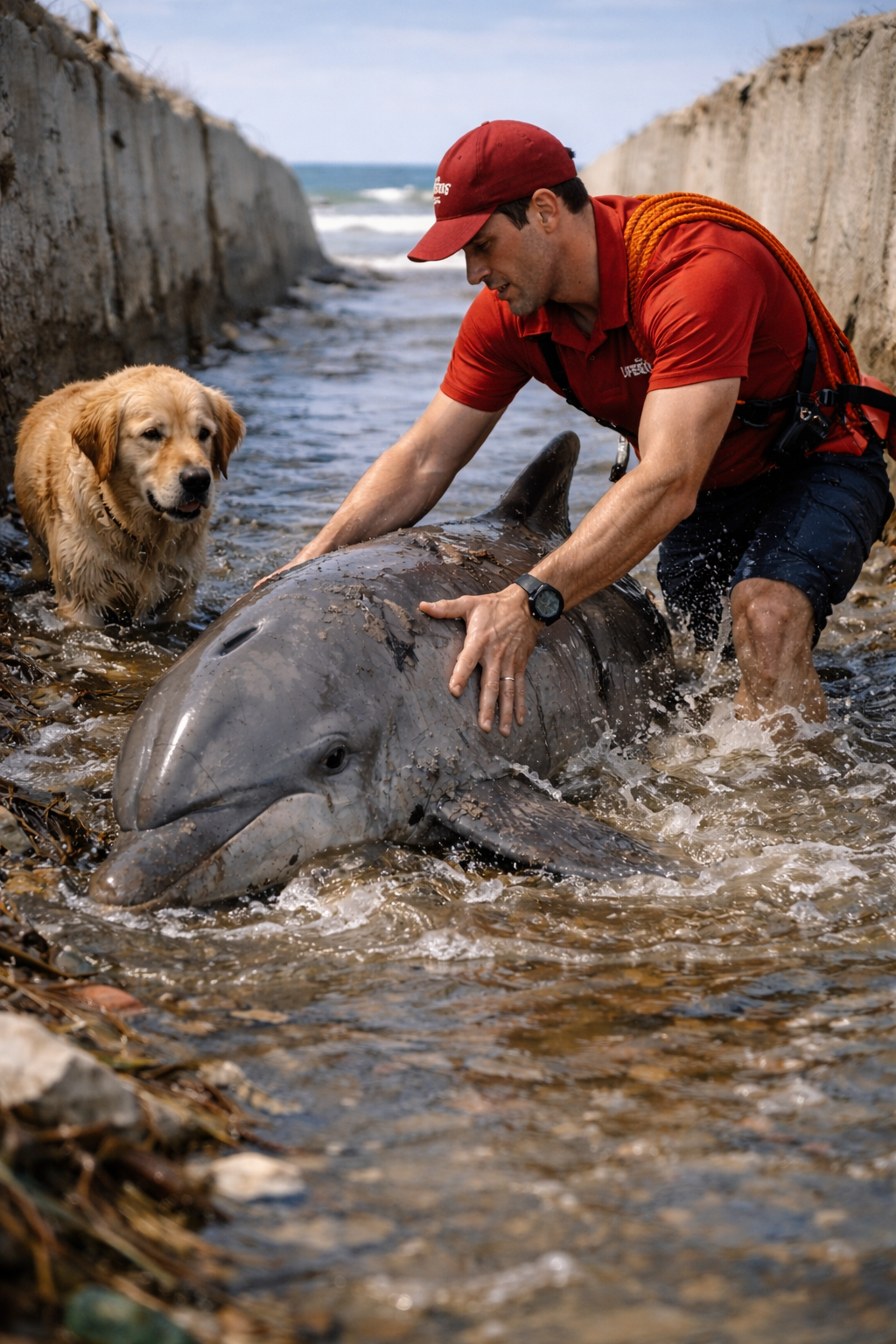
The lifeguard grabbed basic equipment and followed quickly, running behind the dog toward the canal. The situation shifted from uncertainty to action in seconds.
By the time they reached the canal, the dolphin was still there.
Still stuck.
Still unable to move.
But no longer alone.
The moment everything begins to change
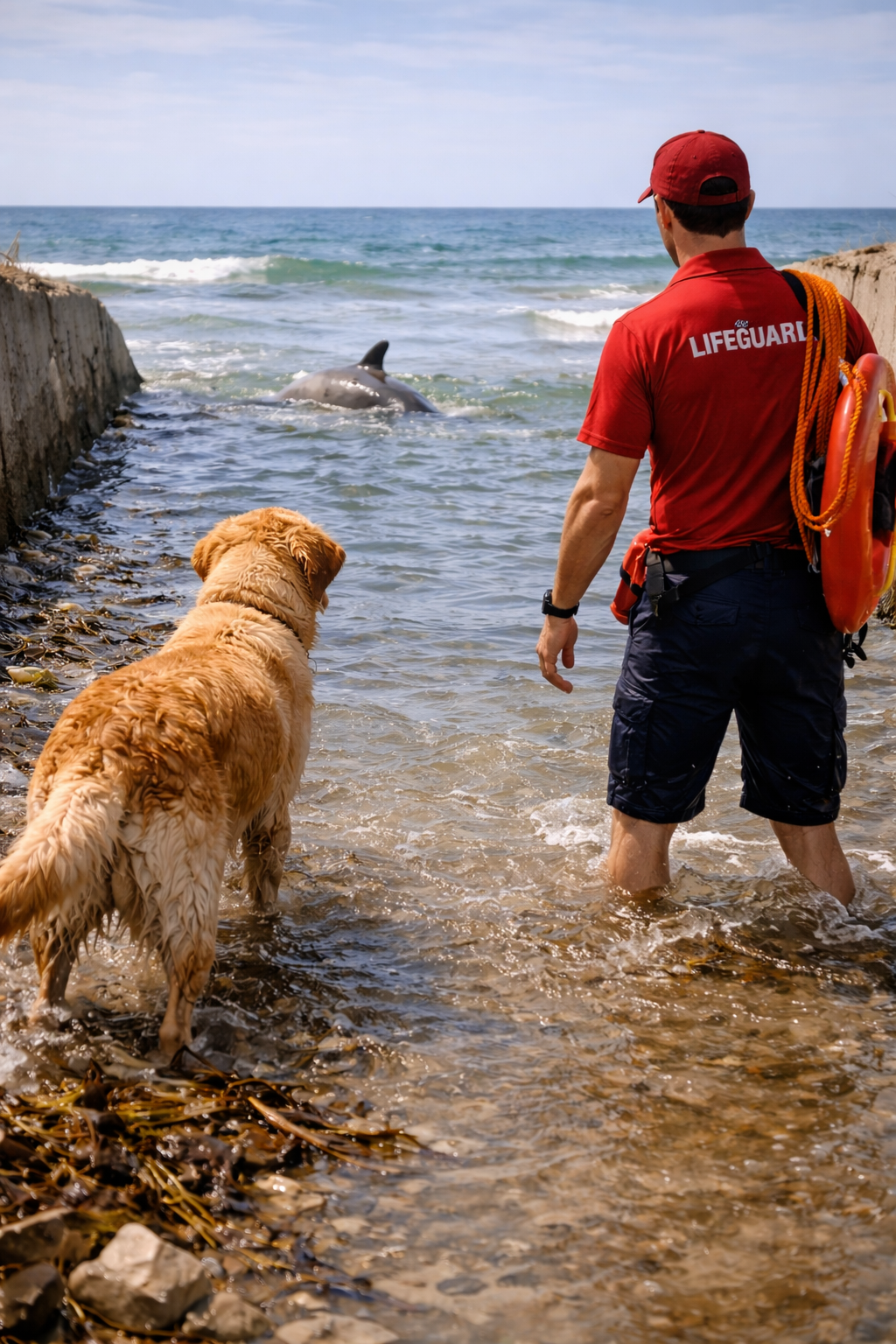
The lifeguard moved carefully into the water, supporting the dolphin’s body to reduce pressure and allow movement. Every action was controlled, slow, focused on minimizing stress.
The water splashed slightly as the dolphin began to shift.
Not freely.
But enough.
The dog stood nearby, watching closely, no longer barking, no longer moving urgently.
Just observing.
When effort turns into progress
Step by step, the dolphin was guided forward.
Out of the shallow canal.
Toward the open water.
The transition wasn’t instant, but it was visible. Each movement brought it closer to the ocean, closer to the space where it belonged.
A moment that didn’t need words
Once the dolphin reached deeper water, everything changed.
Its movement became smoother.
Stronger.
More natural.
It swam forward, away from the canal, into the open sea.
Free again.
What this moment really shows
At the edge of the water, the dog and the lifeguard stood still, watching.
No celebration.
No reaction.
Just quiet observation.
Because sometimes, the result is enough.
A simple truth
Not every call for help is loud.
Not every problem is seen immediately.
But sometimes—
Someone notices.
A quiet ending
The ocean remained calm.
The canal stayed the same.
But something had changed.
Because what was once stuck—
Was no longer.