Something about the scene didn’t feel right at first.
The street was busy, full of movement, noise, and people focused on their own routines.
But in the middle of all that activity, one small detail stood still.
And once you noticed it, it was impossible to ignore.
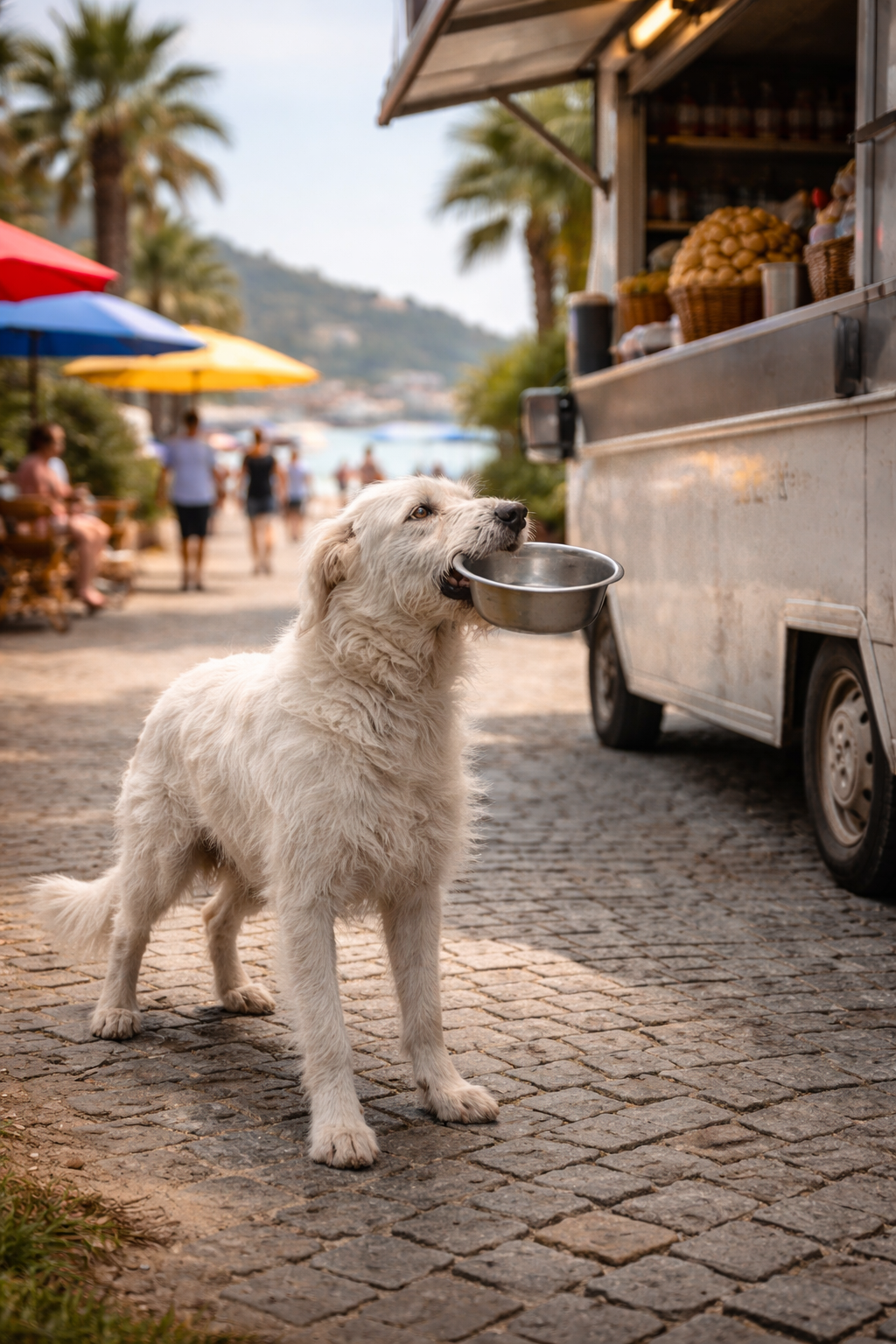
The dog stood in front of a small beach kiosk, holding a metal bowl in its mouth. Its body looked thin, its ribs slightly visible under its fur, and its posture wasn’t relaxed. It wasn’t moving around like a stray looking for scraps. It was standing still, focused, almost as if it had a purpose.
People passed by without stopping. Some glanced briefly, others didn’t even notice. The scene around it stayed normal, but the dog didn’t fit into that normality. It didn’t wander. It didn’t bark. It just waited.
The vendor inside the kiosk finally noticed.
At first, he didn’t react strongly. But within seconds, his expression changed. He leaned forward aggressively, grabbing a wooden stick from inside the kiosk. His posture shifted from neutral to hostile, and the tension in the moment became obvious.
The dog didn’t run immediately.
It stepped back slightly, its paws adjusting on the ground, but it didn’t drop the bowl. It stayed there, even as the man extended the stick toward it. The message was clear: leave.
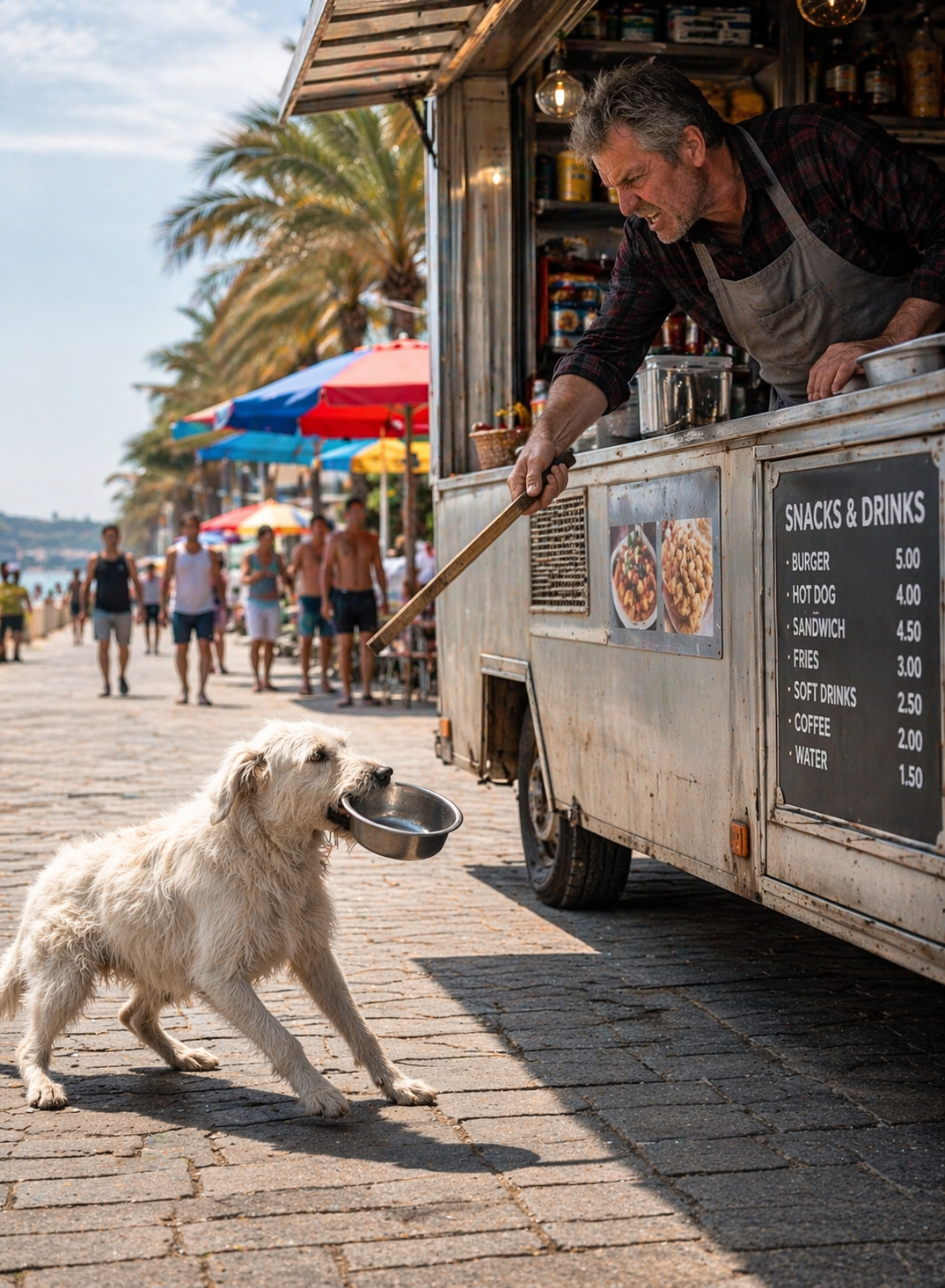
The man’s movements became sharper. The stick swung closer, faster, not making contact but enough to force the dog away. The air around them felt heavier, not because of noise, but because of the contrast between the dog’s stillness and the man’s aggression.
The dog finally moved back more quickly, its body lowering, ears pulled back. The bowl tilted slightly in its mouth as it stepped away. There was fear in its movement, but not chaos. It didn’t run blindly. It retreated with direction.
The people around them noticed for a moment, but just as quickly, they continued walking. The scene didn’t stop the world around it.
But something about the dog’s behavior didn’t match a simple rejection.
It wasn’t just leaving.
It was going somewhere.
The dog turned into a narrow alley near the beach, where the light softened and the noise from the street faded. The environment changed immediately—less movement, less sound, more stillness.
That’s where the truth became visible.
The dog dropped the metal bowl onto the ground, the sound small but clear in the quiet space. Then it moved forward, slowly, toward a corner between wooden crates.
There, three small puppies lay close together.
Weak.
Barely moving.
The dog approached them and gently nudged one of them with its nose. The action was careful, almost protective. This wasn’t a stray wandering without direction.
It had a reason.
It had something depending on it.
The moment shifted completely.
What looked like begging was something else entirely. The dog wasn’t searching for food for itself. It was trying to bring something back. The empty bowl wasn’t a symbol of need—it was a tool.
Back on the street, the situation was also changing.
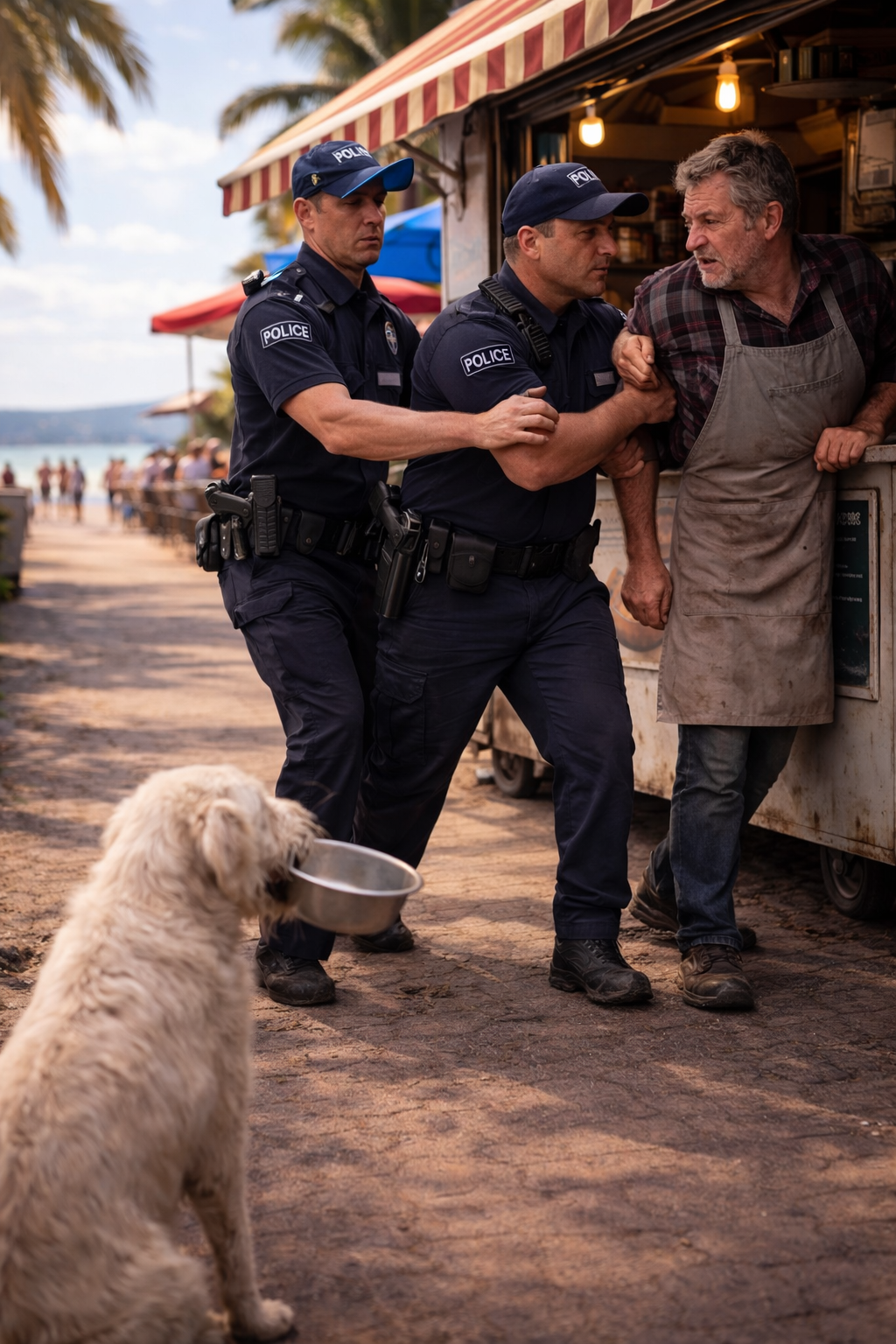
The interaction at the kiosk had not gone unnoticed by everyone. This time, the reaction came from people who didn’t ignore it. Two police officers approached the kiosk, their movements direct and controlled.
The vendor’s expression changed quickly from anger to confusion. The situation escalated, but not in the same direction as before. The officers took control, holding him firmly and questioning his actions.
What had been a small moment became something larger.
Accountability replaced indifference.
Later, in the same alley where the dog had gone, the atmosphere felt completely different. The harsh tension from earlier had been replaced with something calmer, more focused.
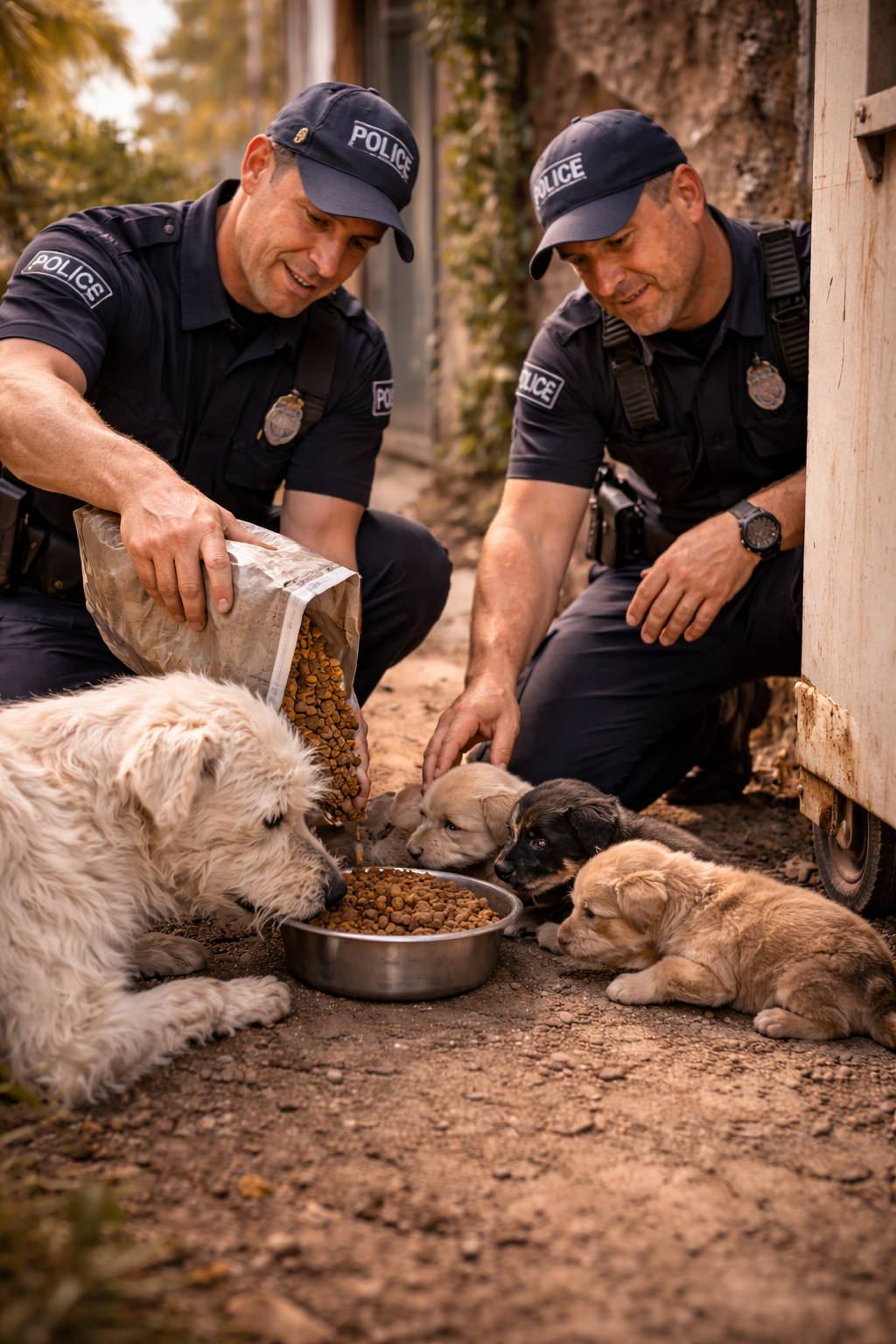
The police officers were now kneeling near the puppies. One of them poured food into the metal bowl, while the other gently placed it closer to them. The puppies responded slowly at first, then more eagerly, small signs of life returning with each movement.
The dog stayed close, watching everything carefully. It wasn’t tense anymore, but it wasn’t fully relaxed either. It remained alert, as if still responsible for what was happening.
The difference between the beginning and the end of the moment was clear.
What started as rejection had turned into something else.
The meaning behind the moment
Situations like this often go unnoticed because they look small at first. A dog standing with a bowl doesn’t seem important in a busy street. It blends into the background, easy to ignore.
But not everything is what it looks like in the moment.
The dog wasn’t asking for itself.
It was trying to provide.
And the only reason that became clear was because the story didn’t end at the first impression.
A simple truth
Sometimes, the difference between ignoring and understanding is just one extra moment of attention.
And sometimes, that moment changes everything.